Currency Boliviano (BOB). Reference exchange rate close to 6.96 BOB per USD (verify before travelling).
Pricing Hotels and agencies quote in USD. Local cash is handy for markets, tips and villages.
USD cash Carry banknotes in good condition. Outside La Paz, Sucre and Santa Cruz, ATMs are scarce.
Cards Visa and Mastercard are accepted in boutique hotels and city restaurants, less so in markets.
ATMs Functional in large cities. Carry two cards from different banks, kept separately.
Tipping 10% in restaurants with table service. Guides, drivers and lodge staff are tipped in boutique travel.
Latin America Colombians, Mexicans, Argentines and most South Americans do not require a tourist visa.
Stay Up to 90 days per calendar year is allowed for visa-exempt countries.
Spain Spanish citizens also do not require a tourist visa to enter Bolivia.
Passport Valid for at least six months on entry. Immigration rules change: verify before travelling.
Documents Keep the voucher of your first lodging, international insurance and return flight to hand.
Yellow fever Mandatory vaccine if your itinerary includes the Amazon (Rurrenabaque, Madidi, Beni). Apply at least 10 days before.
Altitude Altitude sickness is real. Progressive acclimatisation, hydration, coca tea and no alcohol on the first day.
Recommended Hepatitis A and B, typhoid fever and tetanus up to date.
Insurance Essential, with medical evacuation cover: the altitude may require an urgent descent.
Water Always bottled, even for brushing your teeth in modest hotels.
Domestic flights Boa, Amaszonas and Ecojet connect La Paz, Uyuni, Sucre and Santa Cruz on short legs.
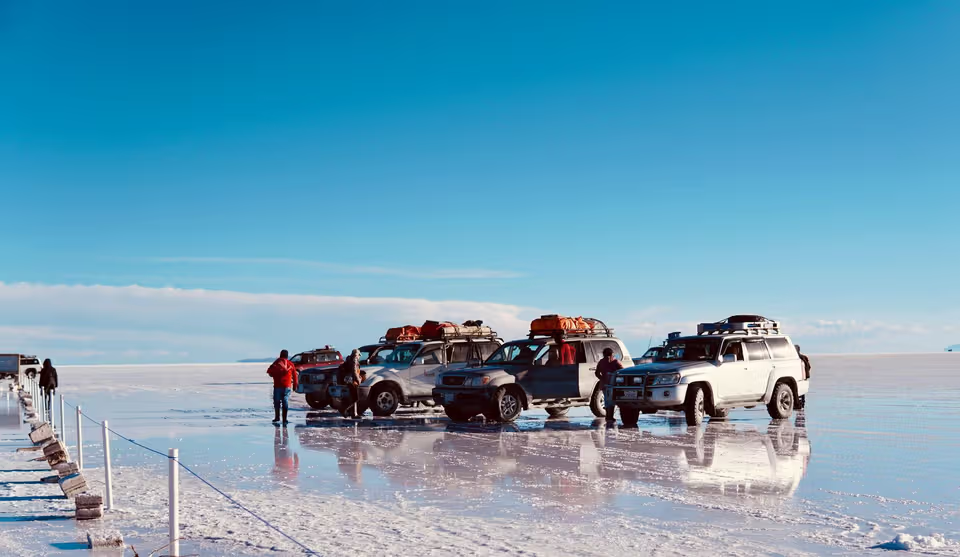
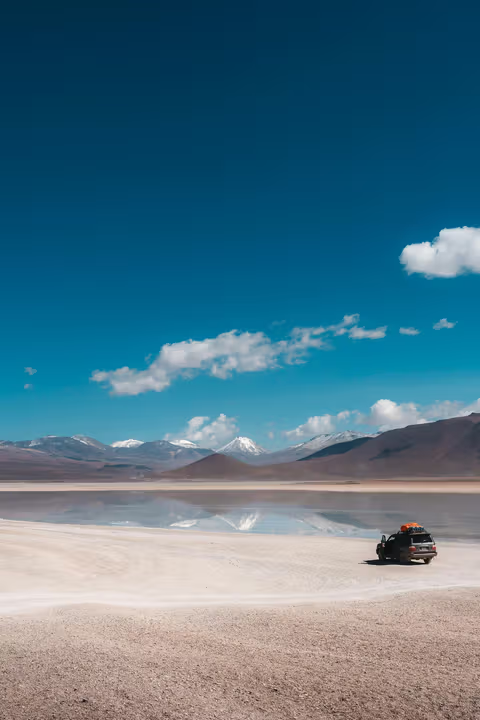
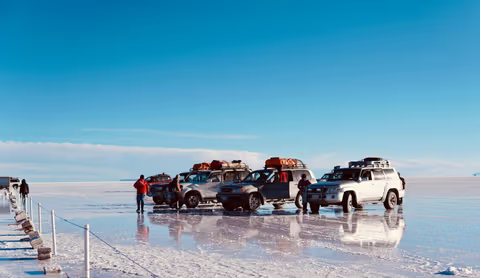
Private 4x4 The CocoVolare standard in Uyuni: a privatised four-seat vehicle, not a mass group.
Private driver Recommended for city days in La Paz and Sucre. It saves two to three hours a day.
Apps Uber works in La Paz and Santa Cruz. WhatsApp is the universal channel with guides and hotels.
Road blockades Protests and road blockades are part of political life. CocoVolare monitors routes before every departure.
Official languages Spanish plus 36 indigenous languages recognised by the 2009 Constitution.
Most spoken Alongside Spanish, Quechua and Aymara structure daily life on the altiplano.
English Limited: functional in boutique hotels and specialist guides, scarce outside tourist circuits.
Vocabulary Jallalla (long live) · Pachamama (mother earth) · ch'alla (offering) · yatiri (Aymara sage).
Detail CocoVolare works with guides who come from the community: that changes the kind of access a traveller gets.
Pachamama Before drinking alcohol a little is poured on the ground (ch'alla). Repeating the gesture reads as respect.
Photography Do not photograph indigenous people without asking. At sacred sites, drones only with authorisation.
Coca The coca leaf is not a drug: it is an Andean ceremonial food. Accepting it when offered is a sign of respect.
Pace The altiplano and Sucre move at another pace. Impatience reads as a lack of manners.
Offerings Do not step on the white tables with coca and sweets that appear on corners or doorways. Walk around them in silence.