European Gastronomic Route · CocoVolare

Combined route · 4 countries

European Gastronomic Route

Markets, Michelin stars and wineries: Europe told plate by plate.

14–16 days 4 countries Concierge 24/7

The essence

Europe can also be understood with a fork

Some travelers have already done the Europe of museums and now want the other one: the Europe you understand with a fork. This route crosses the four countries that wrote the rules of the Western table (Spain, France, Italy and Portugal) on a single two-week thread. Pintxos at one in the afternoon in San Sebastián, a Parisian three-star booked months in advance, handmade pasta at a Roman trattoria with no English menu, Douro wines tasted in the cellar where they were born. It is Europe told plate by plate, much more than a restaurant tour.

The CocoVolare difference is served before you arrive. The impossible tables locked in the moment you confirm dates, the sommelier who crosses the Douro with you, the pasta class with a real nonna and not an actor, the markets walked at the hour the chefs shop. You arrive with appetite and curiosity; we bring the delicious map, solved. Fourteen to sixteen days later you come home with two or three extra kilos and a palate re-educated forever. The first goes away; the second never does.

4 countries at the table on a single thread
30+ Michelin stars within the route's reach
7 cities, from Madrid to Porto
2,000 years of vineyards between the Douro and Chianti

Stage by stage

The route, in 6 acts

The capital of tapas · European Gastronomic Route 01 · Madrid

2-3 nights

The capital of tapas

Madrid, Spain

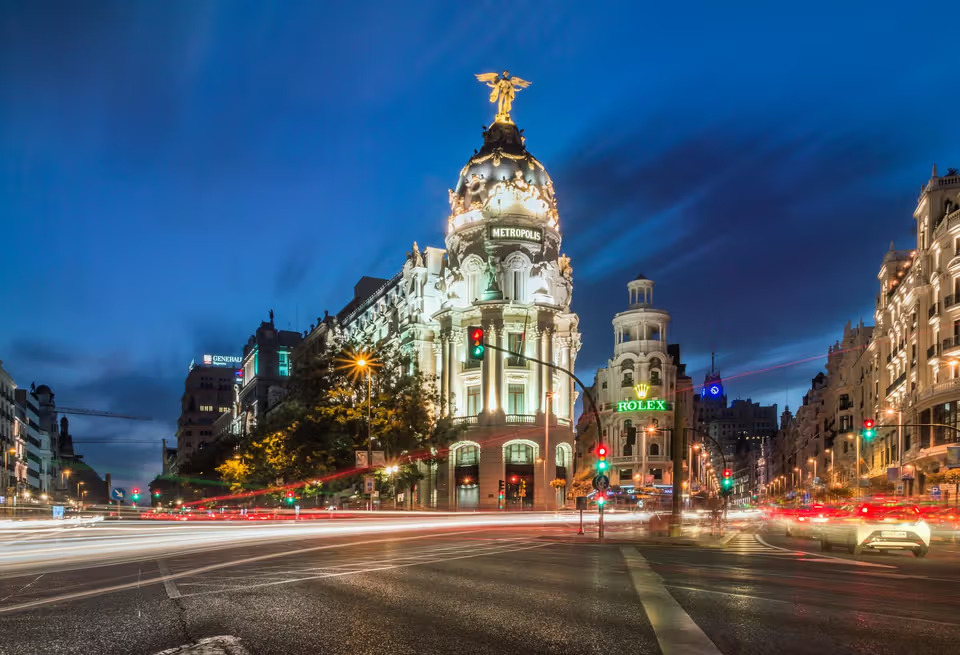
Madrid opens the route with the most important lesson: in Spain you eat standing up, late, and among friends. A market morning with a chef, serious tapas through La Latina and the San Miguel Market, a table at the world's oldest restaurant (Botín, roasting suckling pig since 1725) and, appetite permitting, a first Michelin star to calibrate the journey. You also learn the Spanish clock here: dinner starts at nine and nobody is in a hurry.

Highlights
Guided tapas through La Latina and San Miguel · A table at Botín, the world's oldest restaurant · Market morning with a chef · Opening Michelin-star dinner
More stars per square meter than anywhere · European Gastronomic Route 02 · San Sebastián

2 nights

More stars per square meter than anywhere

San Sebastián, Spain

Few cities on Earth concentrate as many Michelin stars per capita as San Sebastián, and yet its greatest luxury costs three euros: the pintxo. The Old Town is covered bar by bar, with txakoli poured from a height and an order we know by heart. The next day, the counterpoint: a temple of Basque haute cuisine overlooking the Cantabrian Sea, or a traditional cider house where the txuleta is carved by the fire. It is the favorite stage of those who thought they had tasted everything.

Highlights
Bar-by-bar pintxo route through the Old Town · A table at a Basque three-star · Traditional cider house with fire-grilled txuleta · La Concha promenade to build an appetite
The French liturgy · European Gastronomic Route 03 · Paris

3 nights

The French liturgy

Paris, France

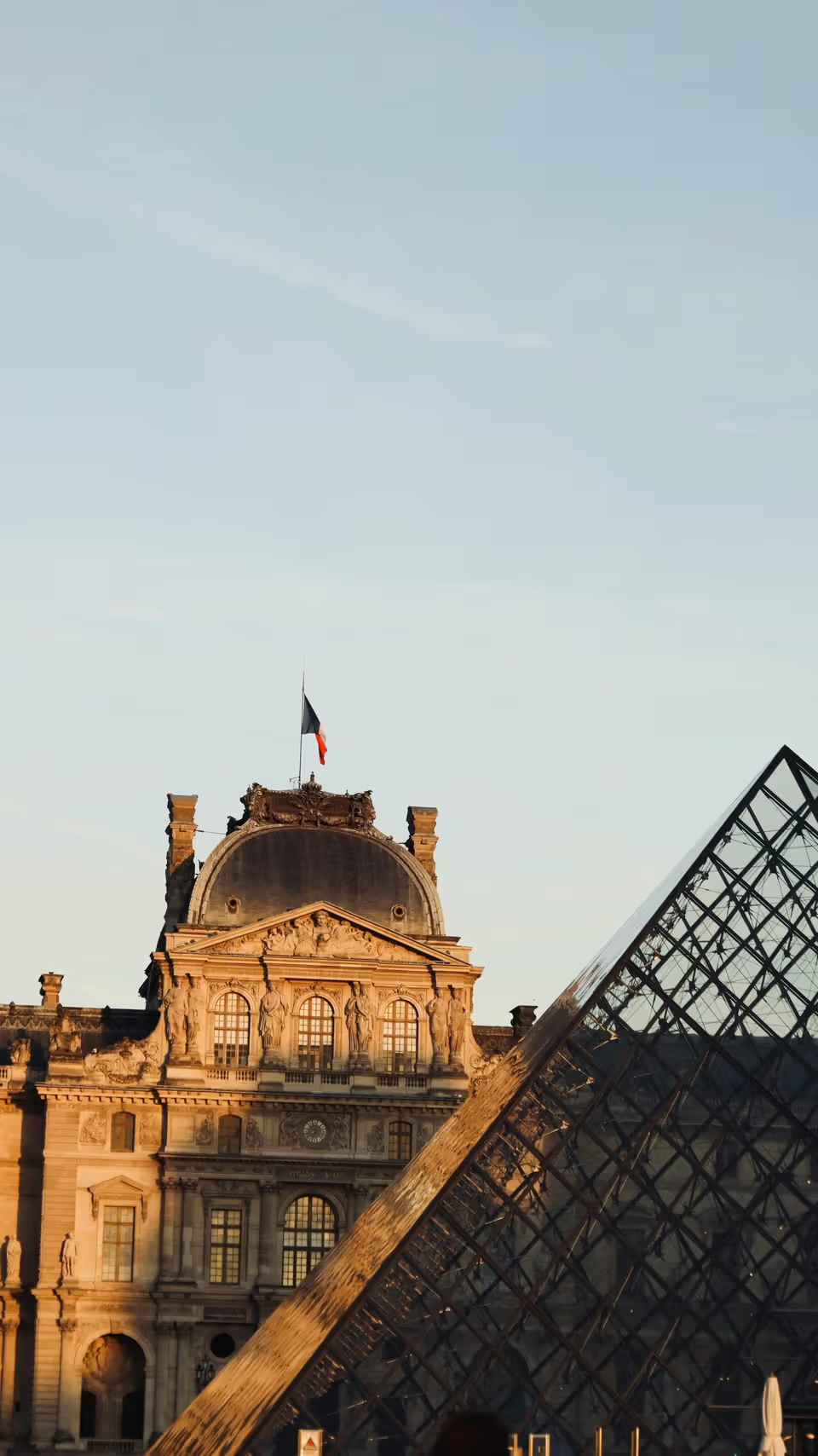
France turned eating into liturgy and Paris remains its cathedral. Here the trip moves up a register: a white-tablecloth dinner at a Michelin-starred address booked months ahead, a morning of fromagerie and boulangerie with someone who can tell an 18-month comté from a 24, the rue Mouffetard market at the chefs' hour, and one final pâtisserie that justifies the whole journey. Between courses, there is Paris, not a bad side dish either.

Highlights
Michelin-star dinner booked by us · Cheese and bread route with an expert affineur · Rue Mouffetard market with a chef · French wine tasting in a private cellar
The cuisine that asks no permission · European Gastronomic Route 04 · Rome

2-3 nights

The cuisine that asks no permission

Rome, Italy

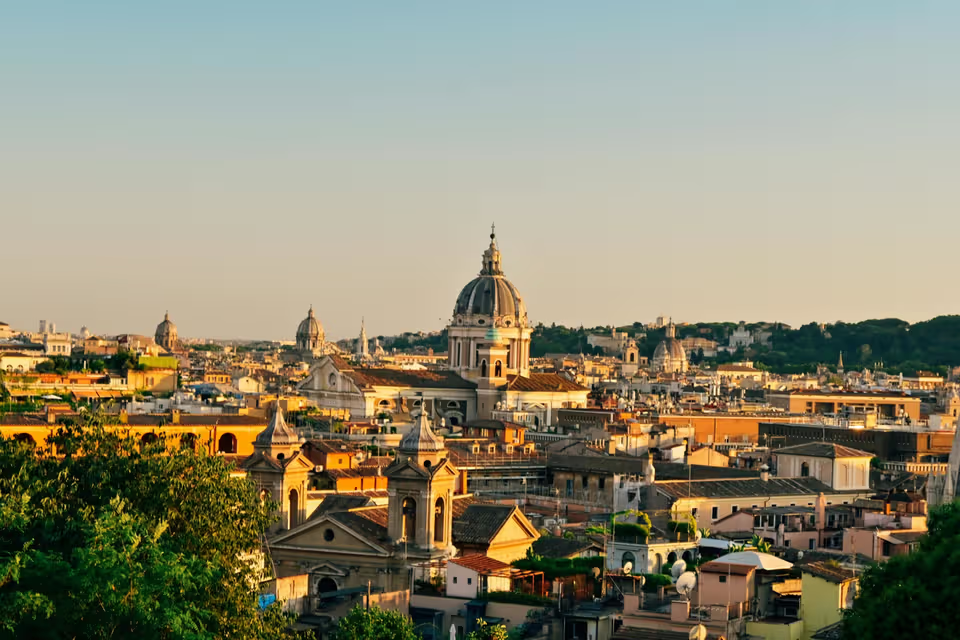
After the French liturgy, Rome is delicious disorder: here great cooking lives in neighborhood trattorias where carbonara has unwritten rules and the waiter argues with you if you ask for changes. Testaccio market with a gourmand guide, the four Roman pastas explained and eaten where they were born, a carciofo alla giudia in the old ghetto, and real gelato, no fluorescent mountains. Rome proves that excellence can also wear a paper tablecloth.

Highlights
Testaccio market and the four Roman pastas · Historic trattoria with no English menu · The Jewish ghetto and carciofo alla giudia · A route of true artisan gelato
Tuscany by glass and ember · European Gastronomic Route 05 · Florence & Chianti

2 nights

Tuscany by glass and ember

Florence, Italy

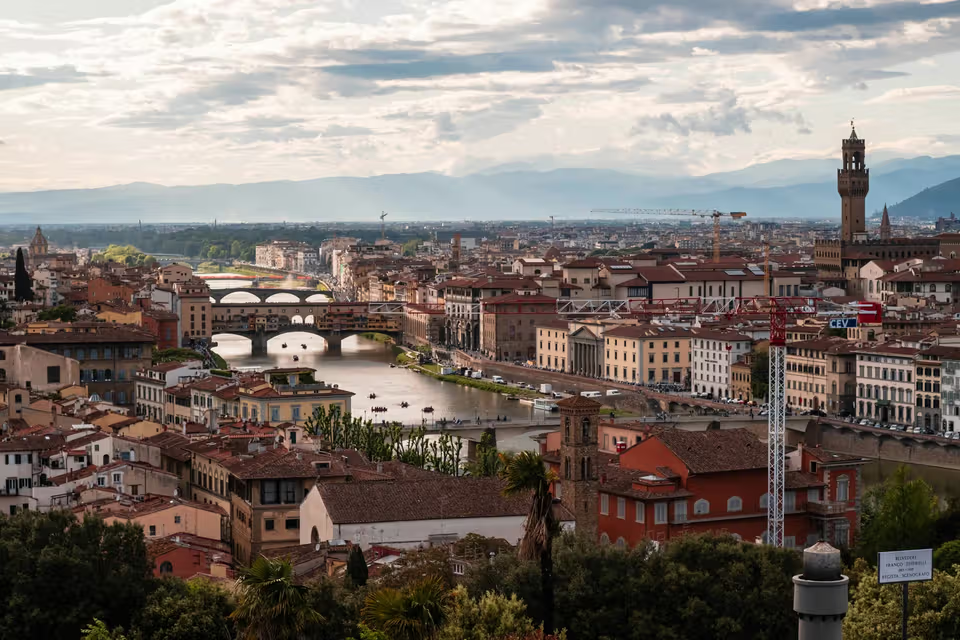
Ninety minutes by train and you change dialect and wine. Florence brings the bistecca alla fiorentina (a kilo of ritual over embers) and the Mercato Centrale; Chianti, forty minutes away, adds the hills, the cypresses and the family wineries where sangiovese is tasted with the producer, not a brochure. A fresh-pasta class with a Tuscan cook closes the stage: you go home knowing how to roll pici by hand, a souvenir that never breaks in the suitcase.

Highlights
Bistecca alla fiorentina at a historic grill · A day of family wineries in Chianti · Fresh-pasta class with a Tuscan cook · Mercato Centrale with guided tasting
The finale with sweet wine · European Gastronomic Route 06 · Lisbon & Porto

3-4 nights

The finale with sweet wine

Lisbon & Porto, Portugal

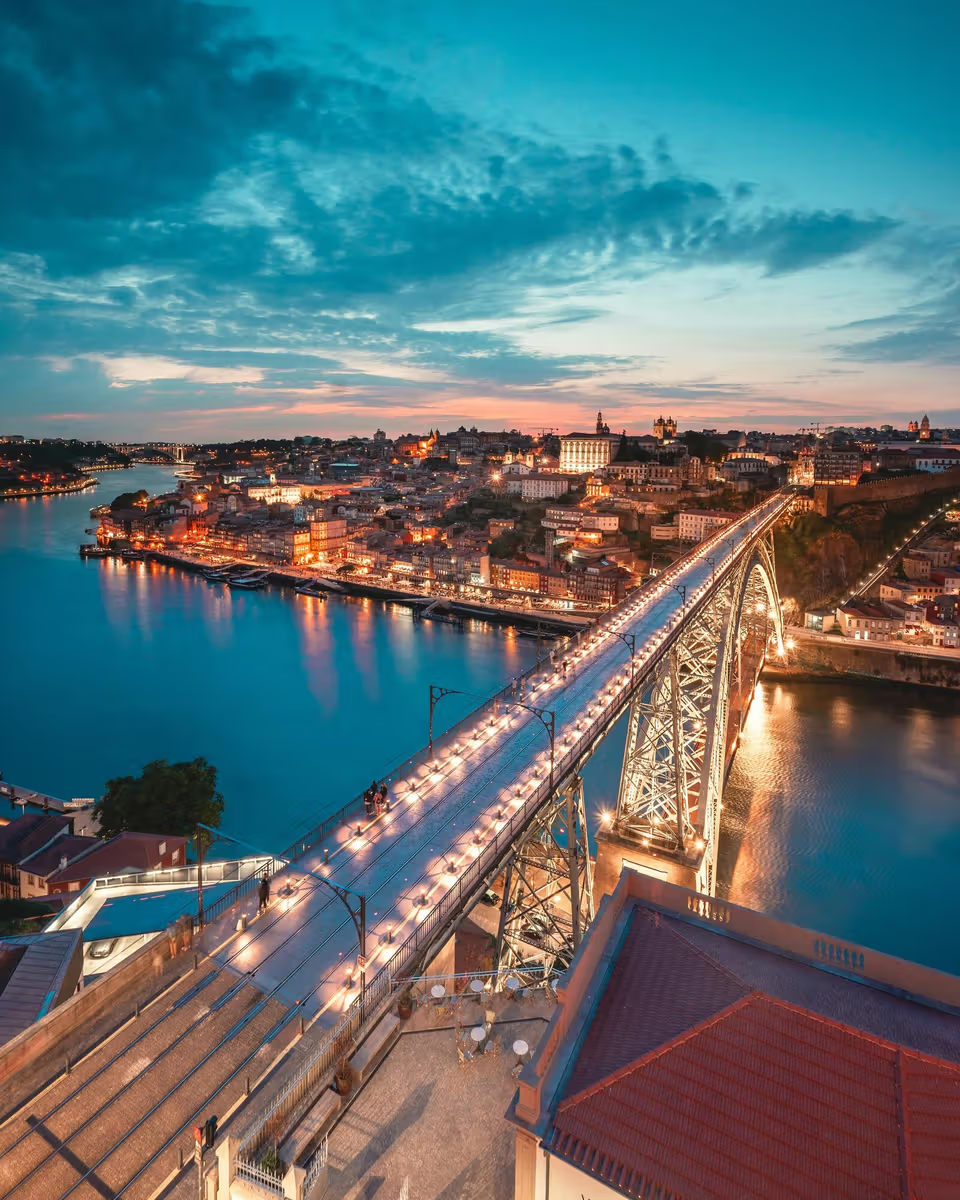
Portugal closes the route with its unbeatable blend of sea and well-fed melancholy. In Lisbon: seafood straight from the auction, a pastel de nata still warm in Belém and a fado dinner where the voice accompanies the bacalhau. Then Porto and the Douro: the century-old port lodges of Vila Nova de Gaia, a lunch among terraced vineyards that have given wine for two thousand years, and a final glass of vintage port watching the river. It is the route's perfect dessert: sweet, slow and with a view.

Highlights
Pastéis de Belém fresh from the oven · Fado dinner with cooking from the sea · Port wine lodges in Vila Nova de Gaia · Lunch among the Douro valley vineyards

In motion

A preview of the route

Climate

When this route works best

May, June and the September–October window are the perfect moment: terraces open, seasonal produce at its peak and, if you aim for autumn, the harvest in Chianti and the Douro. March, April and November reward you with easier tables and nobler prices; we avoid August, half of gastronomic Europe closes for holidays.

Ideal Good Less advisable

When to go · season & budget

Seasons & estimated cost CocoVolare recommends High Mid Low
Jan: Low season · ≈$7,600 per person/trip Jan Feb: Low season · ≈$7,790 per person/trip Feb Mar: Mid season · ≈$8,740 per person/trip Mar Apr: Mid season · ≈$9,500 per person/trip Apr May: High season · ≈$11,400 per person/trip $11,400May Jun: High season · ≈$12,350 per person/trip $12,350Jun Jul: High season · ≈$13,300 per person/trip Jul Aug: High season · ≈$13,110 per person/trip Aug Sep: High season · ≈$11,400 per person/trip $11,400Sep Oct: Mid season · ≈$9,975 per person/trip $9,975Oct Nov: Mid season · ≈$8,550 per person/trip Nov Dec: Mid season · ≈$9,975 per person/trip Dec

In our recommended dates, the estimated cost ranges from $9,975 to $12,350 per person/trip (Premium level, international flights not included).

Investment

What it costs, no fine print

The budget covers boutique and luxury hotels, trains and internal flights, private transfers, gastronomic experiences, tastings and several of the featured tables. Transcontinental flights are quoted separately.

Experience levels · guide budget

USD · per person/trip
Boutique essential Boutique essential: $5,500 USD · per person/trip $5,500 Well-located 4-star boutique hotels, tapas and market routes with local experts, one Michelin-star dinner, winery tastings and concierge support throughout the trip. Premium Premium: $9,500 USD · per person/trip $9,500 Central 5-star hotels, three Michelin-star dinners included, all routes and classes fully private, winery days in Chianti and the Douro with a sommelier, and executive transfers. Signature Signature: $15,000 USD · per person/trip $15,000 Legendary addresses, three-star tables secured, chef's tables and kitchens opened just for you, a private harvest with the producer and a dedicated 24/7 gastronomic concierge.

Indicative 2026 values per person in double occupancy. They exclude transcontinental flights and vary with season, availability and booking date.

CocoVolare recommends

What we would tell a friend

Advice from our travel designers: what we book first, what we avoid, and the details that turn a good trip into an unforgettable one.

01

The big tables get booked first

The three-stars of Paris and San Sebastián open reservations 1 to 3 months ahead and vanish in minutes. They are the first thing we lock in when you confirm dates, before some of the hotels. Tell us your non-negotiables from day one.

02

Alternate high and low registers

The classic mistake is chaining tasting menus. The route alternates on purpose: a white-tablecloth night is followed by a market day and a trattoria. Your palate (and your liver) appreciate the rhythm, and the contrasts are half the lesson.

03

Tell us about allergies and dislikes

Allergies, intolerances or plain aversions are communicated at booking, not at the table: great restaurants adapt entire menus if they know in time. We manage every restriction with the kitchens before your trip.

04

The clock changes with the country

In Spain dinner is at 9:30 pm; in France, 8:00; in Portugal, 8:30, and in Italy a cappuccino after noon gives the tourist away. We hand you the gastronomic clock of each stage so you always eat with the locals.

05

The wine travels with you

Chianti and Douro wineries ship to Colombia, and whatever you buy along the way we consolidate and send by courier in certified packaging. Buy without thinking about the suitcase: that part is on us.

06

Walk between courses

It is no accident that every stage has a walkable historic center: the route is designed for 10,000 to 15,000 daily steps without noticing. It is the only diet compatible with two weeks like these.

FAQ

Frequently asked questions

Is this route only for expert gourmets?

No: it is for anyone who travels with appetite and curiosity. The route combines haute cuisine with markets, taverns and hands-on classes, and every experience comes explained by guides who translate without solemnity. Experts refine nuances; beginners discover a world. Both eat equally well.

How many meals are included in the price?

It depends on the level you choose: the essential includes the guided experiences, the tastings and one starred dinner; premium adds three Michelin tables, and the signature secures the three-stars and private experiences. The rest stays free on purpose: half the route is discovering on your own with our recommendations.

I am vegetarian or have allergies, does this route make sense?

Absolutely. Mediterranean cooking is among the world's kindest to vegetarians, and great restaurants design complete tasting menus without meat or allergens when they know in advance. We manage every restriction directly with the kitchens before you land.

When is the best time for this route?

May–June and September–October. Spring brings the terraces and peak seasonal produce; autumn adds the harvest in Chianti and the Douro, which turns winery visits into a celebration. August is the only period we advise against: many gastronomic temples close for holidays.

How far in advance should I book?

Ideally 4 to 6 months: three-star tables and the small Douro wineries sell out before the hotels do. With 2 to 3 months we can still build a great route, adjusting which restaurants make the cut according to real availability.

European Gastronomic Route

No molds, made to measure

Tell us what excites you and we will design a tailor-made proposal in under 24 hours, with a dedicated travel designer.