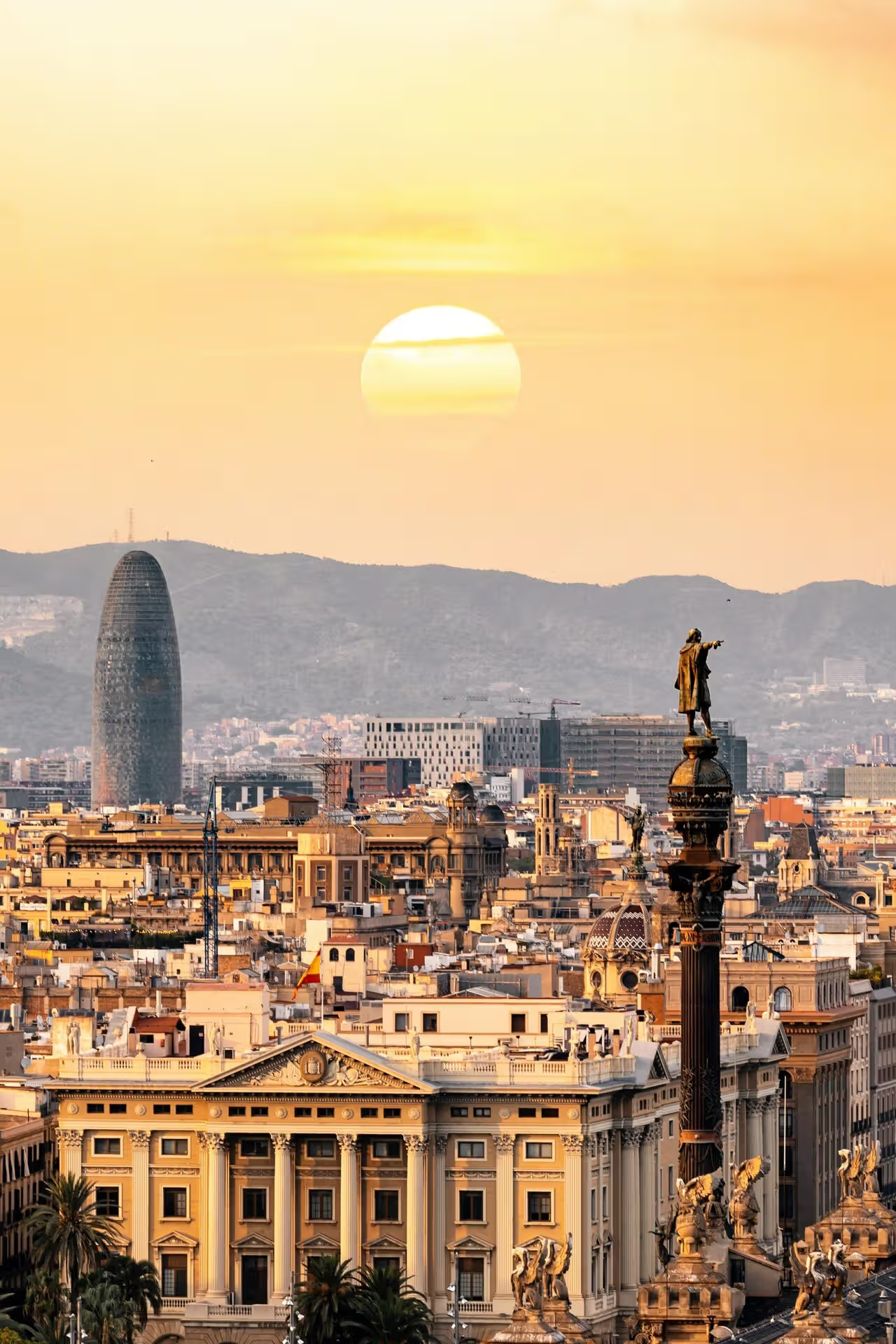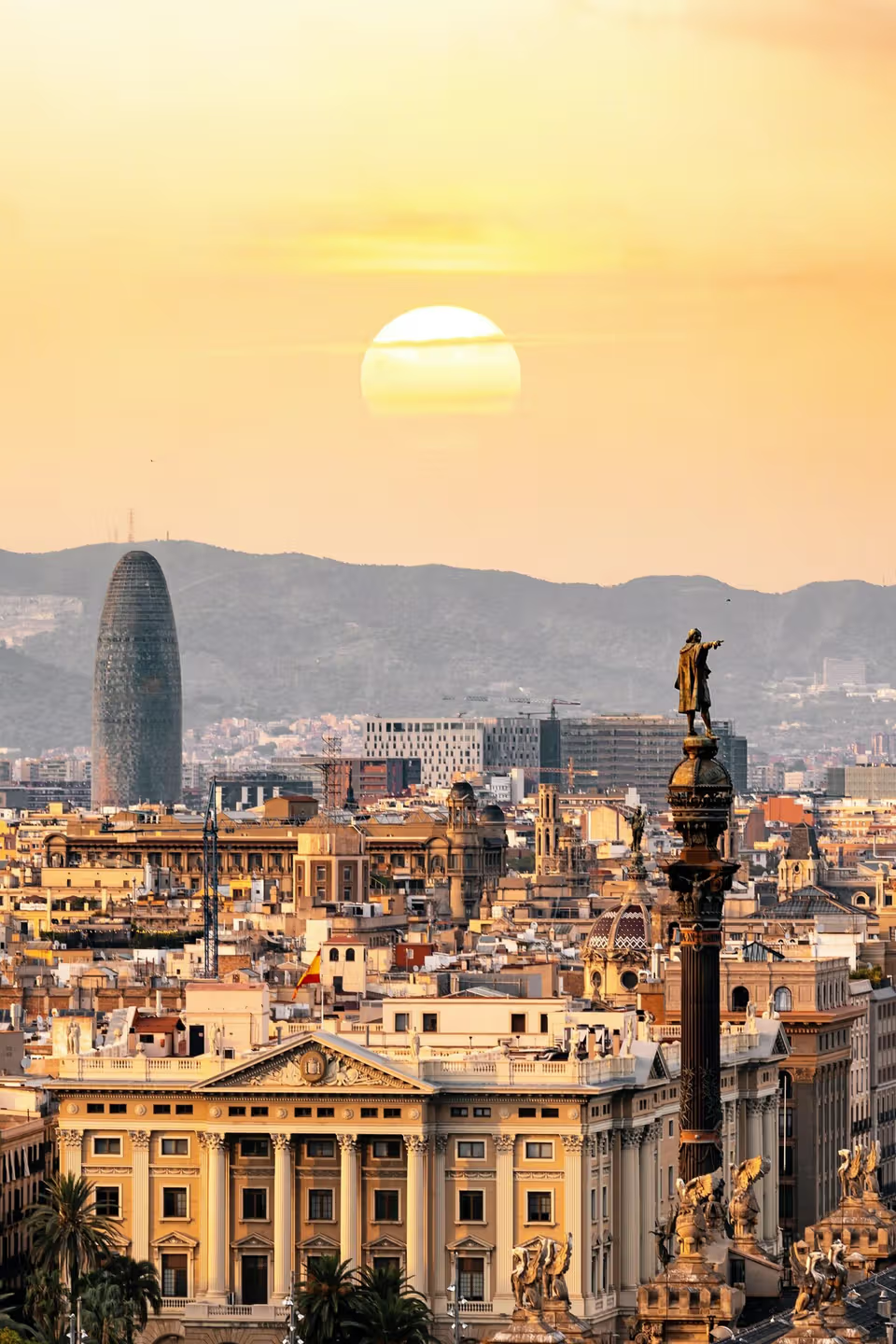
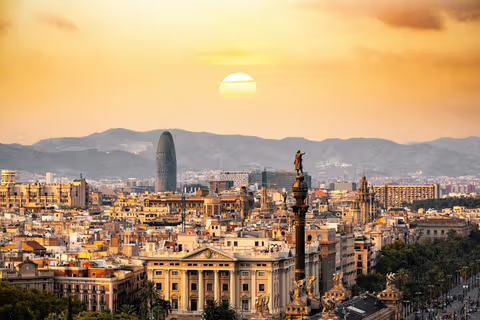
Sunset over the rooftops of Barcelona · Spain
Europe · Boutique

Spain

A country that reinvents itself every two hundred kilometres

Spain is one of those countries you can visit many times without exhausting it, because each region plays a different game. Here the Camino de Santiago and the Costa Brava coexist, flamenco Triana and the quiet restraint of Bilbao, the midday stillness of a La Mancha village and the eternal night of Madrid. Seventeen communities, two archipelagos, five climates living side by side: you don't need to change countries to change worlds.

A country that fits perfectly into a bespoke journey

Spain is the world's second most visited country and yet it still accommodates a truly bespoke journey. The reason is geographical: seventeen autonomous communities and a cultural density that reinvents itself every two hundred kilometres. What works in Seville makes no sense in San Sebastián. What is eaten in Galicia is not what is eaten in Murcia. The light of Cádiz is not the light of Asturias. Compared to Italy or France, Spain wins by a very particular combination: the highest density of Michelin-starred restaurants per capita in southern Europe, the most walkable museum district on the continent, the most extensive high-speed rail network in Europe, and a long-table hospitality that Latin American travellers recognise from the very first lunch. It is a country that rewards both the first-time visitor and the seasoned one returning for the fifth.

17autonomous communities · each one a distinct journey
280+Michelin-starred restaurants
49UNESCO World Heritage Sites
4,000 kmof AVE high-speed rail · Europe's most extensive network
Regions

Five Spains within one country

The cultural capital, Mediterranean Modernisme, the al-Andalus south, the gastronomic summit of the north and the sun-drenched Levante. Each region is a distinct journey; every combination bears the CocoVolare signature.

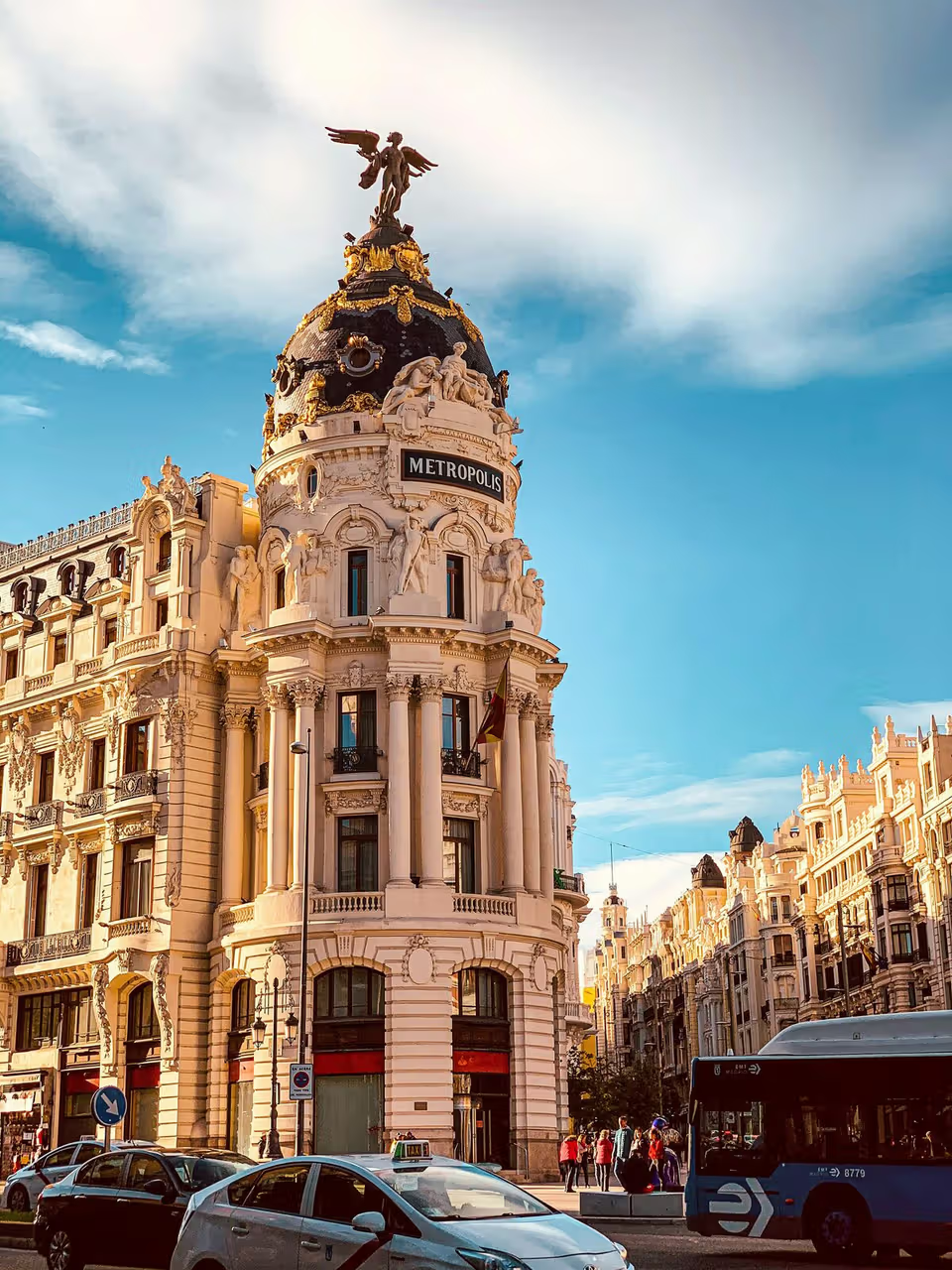
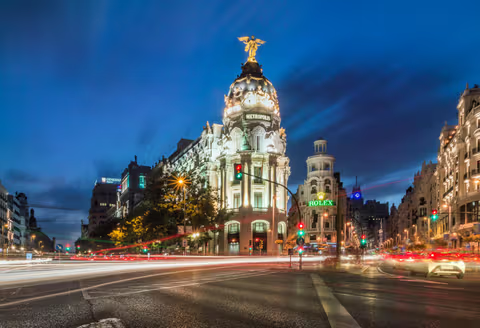
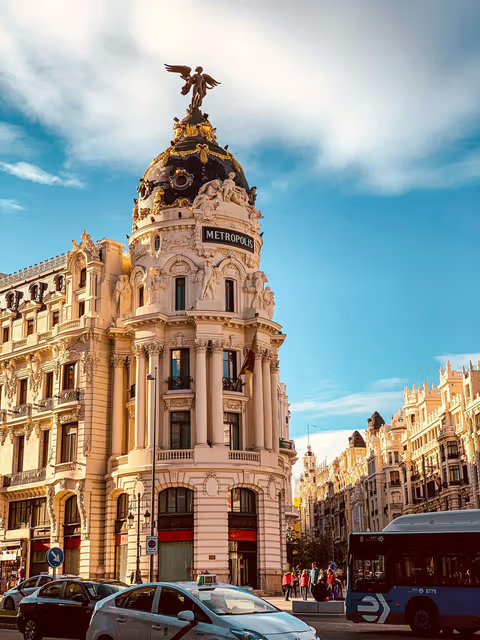
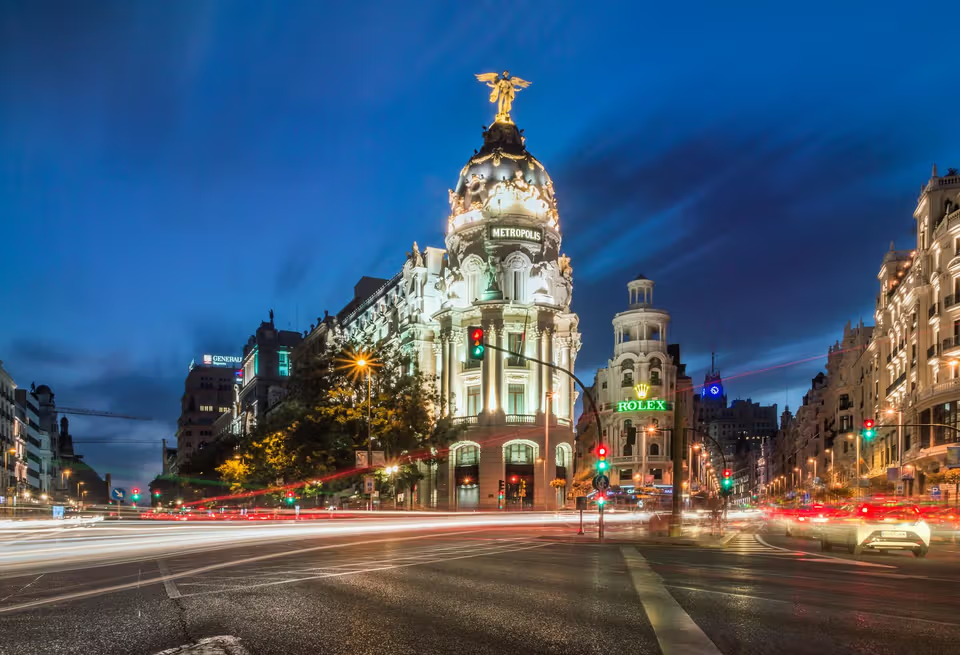
The Metropolis Building on Madrid's Gran Vía at dusk 01 · Capital 3–4 nights

Madrid and central Spain

The capital that never sleeps and always rewards

Madrid doesn't give itself up on the first day — it unlocks on the third. The Art Triangle within fifteen minutes' walk, the country's finest network of traditional taverns and AVE connections to almost every region. Toledo, Segovia and Salamanca are less than an hour away.

Hotels
Mandarin Oriental Ritz · Hotel Único Madrid · Urso
Must-see
Museo del Prado · Royal Palace · Reina Sofía
Best season
May, June and September · Castilian light
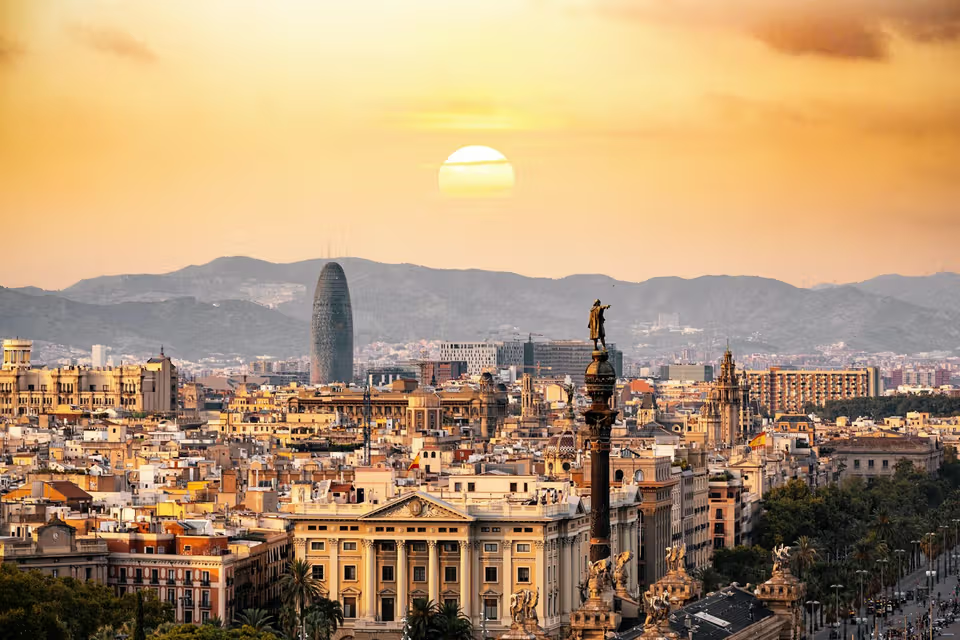
Sunset over the rooftops of Barcelona 02 · Modernisme 3–4 nights

Barcelona and Catalonia

Sea, mountains and Gaudí

A Mediterranean city stretched between the flat grid of the Eixample and the soaring towers of Gaudí. Modernisme, technically dazzling cuisine in the tradition of El Bulli and Dalí's Costa Brava two hours away. Disfrutar was named the world's best restaurant in 2024.

Hotels
Mandarin Oriental · Casa Fuster · Hotel Arts
Must-see
Sagrada Família · Park Güell · Casa Batlló
Best season
May, June and September · Mediterranean light
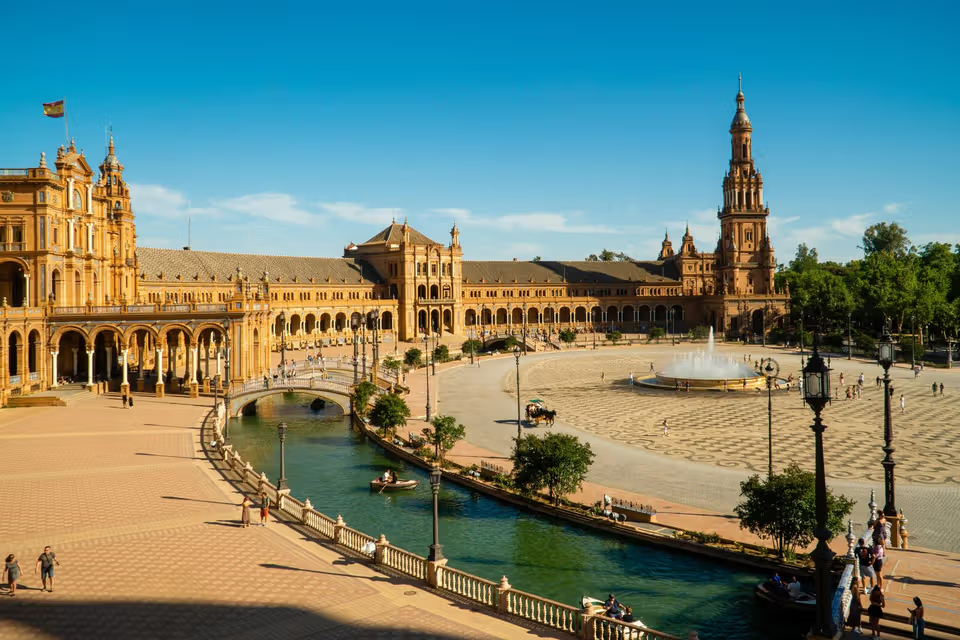
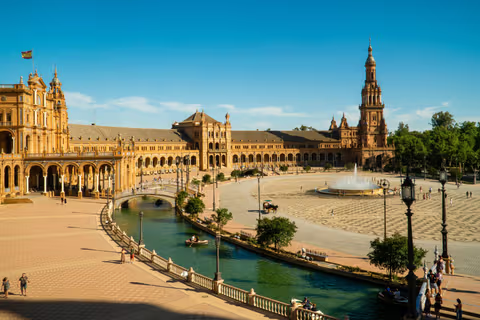
Aerial view of Seville's Plaza de España 03 · South 3–4 nights

Andalusia

Light, shadow and al-Andalus

Soulful flamenco Seville, the Mosque-Cathedral of Córdoba, the Alhambra as the last great Nasrid palace and the white villages of Cádiz. The south that is walked slowly, eaten at the bar and lived in the courtyard.

Hotels
Hotel Alfonso XIII · Parador de Granada · EME Catedral
Must-see
Alhambra · Royal Alcázar · Mosque-Cathedral of Córdoba
Best season
March to June and October · avoid July–August
Spanish city seen from a hilltop viewpoint 04 · North 2–3 nights

Basque Country and the north

The gastronomic summit of the country

San Sebastián, the pintxo capital, with three three-Michelin-star restaurants in its surroundings. Bilbao and its post-industrial reinvention around the Guggenheim. La Rioja wine country and the Picos de Europa. The green north with its long, unhurried table.

Hotels
Hotel María Cristina · Marqués de Riscal · Mercer Rioja
Must-see
Old town pintxos · Guggenheim · La Rioja wineries
Best season
May to September · mild Atlantic climate
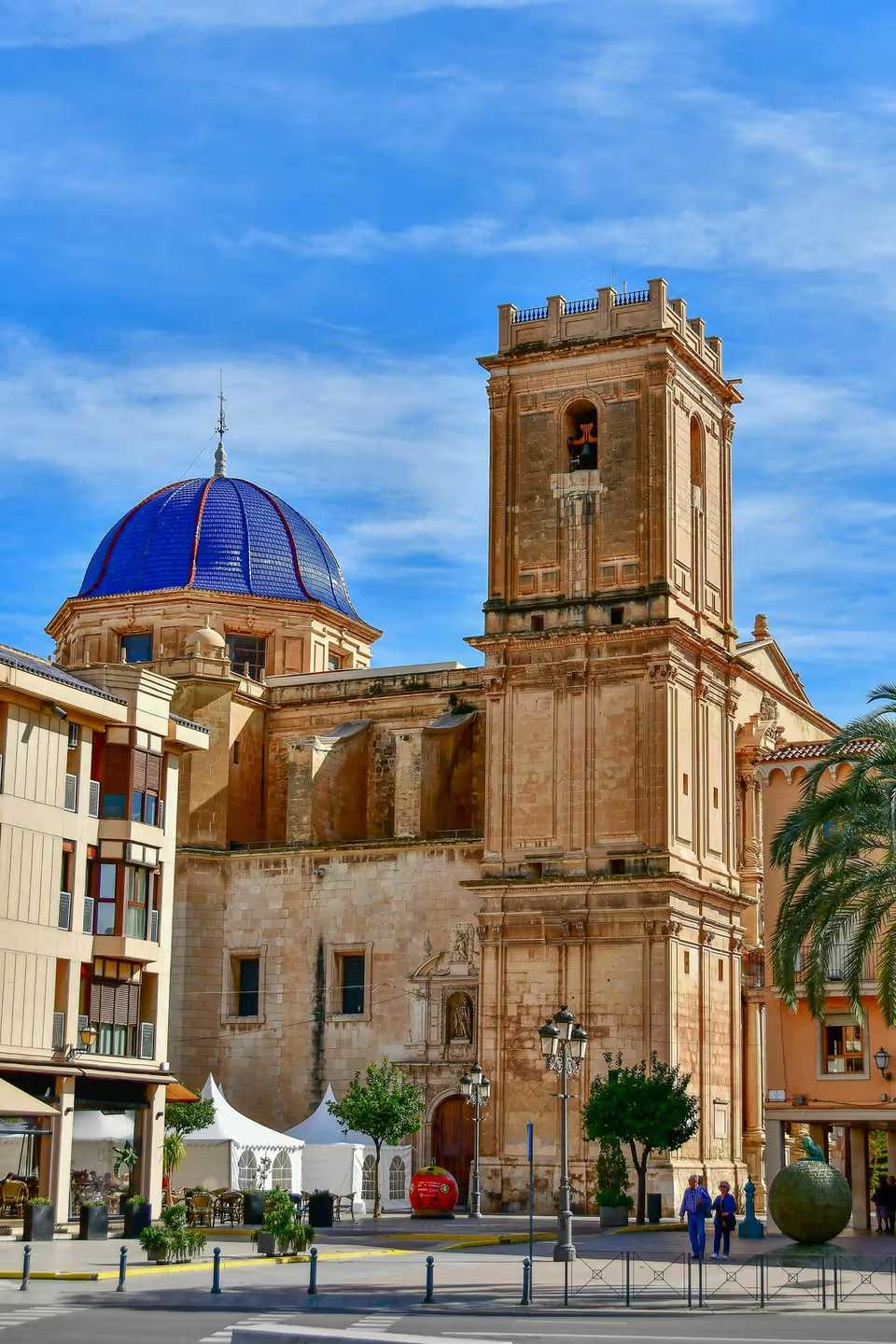
Blue-tiled basilica dome and palm trees in the Spanish Levante 05 · Levante 2 nights

Valencia and the Levante

The birthplace of paella

Valencia balances tradition and modernity: the City of Arts and Sciences, the fertile huertas, the Albufera wetlands where orthodox Valencian paella was born and the city's urban beaches. The Mediterranean at its most lived-in and least touristy.

Hotels
Caro Hotel · Palacio Vallier · boutique hotels of El Carmen
Must-see
City of Arts and Sciences · Albufera · Central Market
Best season
April to June and September · March for Las Fallas
Intermezzo

Spain wins by accumulation, not by grand gestures.

The surprise doesn't come from the unexpected — it comes from the detail. The light, the smell of a market, the noise of a Seville café at nine in the morning, the quiet warmth of a Basque taxi driver. Spain lives in public: its plazas have purpose, its terraces are not decorative. The pace shifts by the hour, and for some reason almost everyone ends up walking further than they expected.

"You don't need to change countries to change worlds."· CocoVolare master document
MadridPlaza de Cibeles
White villageSouthern sunset
Atlantic coastNorthern cliffs
BarcelonaMontjuïc in colour
BarcelonaWalking to the Sagrada
MadridPlaza de España
AndalusiaVillage from the air
MálagaMediterranean harbour
Climate

When to go and why

Based on the classic itinerary (Madrid, Andalusia, Catalonia, Basque Country). Our chart shows all twelve months with estimated cost, climate and calendar highlights. Marked in gold, the windows we recommend experiencing Spain with us — chosen for experience, not price.

Spain has five climates coexisting, but the general rule is clear: May, June and September are the best months — long days, peak gastronomy and far less crowding than July or August. The chart shows all twelve months with estimated cost, temperature and iconic festivals. Marked in gold, the windows we recommend experiencing Spain with us.

Regional summary

Region
Summer (Jun–Aug)
Autumn (Sep–Nov)
Winter (Dec–Feb)
Spring (Mar–May)
Best window
Madrid and central Spain
Hot and dry · 32°C
Mild · 18°C
Cold and dry · 8°C
Mild · 18°C
May–Jun · Sep–Oct
Andalusia
Extreme heat · 38°C
Warm and mild · 24°C
Temperate · 14°C
Spring-like · 22°C
Mar–Jun · Oct
Catalonia and Levante
Hot and humid · 30°C
Mild · 21°C
Mild · 12°C
Pleasant · 19°C
May–Jun · Sep
Basque Country and the north
Mild · 24°C
Cool and rainy · 17°C
Cold and rainy · 10°C
Variable · 15°C
Jun–Sep
Canary Islands
Warm and stable · 26°C
Warm · 25°C
Mild · 21°C
Mild · 22°C
Year-round
Essentials

What you need to know before you go

Verified by our travel designers and updated for 2026. Browse by category.

Currency Euro (EUR). Notes from €5 to €200; the €500 note has very restricted circulation and is often refused.
Cards Accepted at 95% of establishments, including small bars. Visa and Mastercard are universal; Amex has more limited coverage. Contactless is the dominant payment method.
Cash Carry between €50 and €150 for markets, tips and small villages. Withdraw from an ATM with a multi-currency card (Revolut, Wise, N26) to minimise fees.
Currency exchange Avoid tourist exchange booths near Sol or Las Ramblas: rates are up to 12% worse than an ATM withdrawal.
Tipping Never obligatory. €1–2 at a tapas bar, 5–10% at a mid-range restaurant, 10–15% at a Michelin-starred restaurant if service was outstanding.
Mobile payments Apple Pay and Google Pay work at any contactless terminal. Bizum is the local peer-to-peer system, but requires a Spanish bank account.
Latin America Colombians, Mexicans, Argentinians and most Latin Americans do not require a visa for tourist stays of up to 90 days within the Schengen Area.
ETIAS Once in force, the ETIAS online travel authorisation will be required — a process that takes just a few minutes. CocoVolare can advise, but the application is completed by the traveller.
Passport Must be valid for at least six months from the date of entry. Immigration rules change: verify before travel.
Documents It is advisable to carry a printed copy of your hotel voucher, your CocoVolare itinerary and your travel insurance. Border checks are infrequent but possible.
Extended stays Stays beyond 90 days, study, work or residency require a specific visa obtained from the Spanish consulate.
Vaccinations None required for travellers from Latin America or North America. Routine vaccinations (tetanus, measles) should be up to date.
Healthcare One of the world's best systems. Top-tier private hospitals: Quirónsalud, HM Hospitales, Vithas.
Insurance Strongly recommended for Latin American and North American travellers: covers medical costs, evacuation and trip cancellation. Allianz, IATI, Assist Card.
Water Tap water is safe to drink throughout mainland Spain. Madrid and the north have exceptionally high-quality water.
Pharmacies Identified by a green cross. Every neighbourhood has a 24-hour on-call pharmacy. During July and August heatwaves: stay hydrated and avoid the sun between 1pm and 5pm.
AVE high-speed train Europe's most extensive high-speed network. Madrid–Seville 2h30, Madrid–Barcelona 2h45. Requires a numbered reserved seat.
Low-cost rail Iryo and Ouigo compete with AVE on the main lines: bought in advance, a fraction of the walk-up fare.
Urban mobility Functional metro systems in Madrid, Barcelona, Bilbao, Valencia and Seville. Cabify and Uber operate in major cities; FreeNow aggregates official taxis.
Car hire Essential for the Andalusian interior, La Rioja, the Costa Brava and rural north. Most vehicles are manual; automatic costs more.
Airports Madrid-Barajas and Barcelona El Prat are the main gateways; Málaga, Valencia, Seville and Bilbao complete the network.
Official Spanish (Castilian) throughout the country.
Co-official languages Catalan in Catalonia, the Balearics and (as Valencian) in the Valencia region; Galician in Galicia; Basque in the Basque Country; Aranese in the Val d'Aran.
English Well understood in large cities and on the coast, less so in small inland villages. Spanish will take you everywhere.
Local touch In Catalonia and the Basque Country, opening with a word of greeting in the local language warms the reception immediately. It is not a requirement — it is courtesy.
Tone Spaniards speak more directly, without elaborate pleasantries. This is not abruptness — it is economy of language.
Meal times Lunch from 2pm to 4pm, dinner no earlier than 9:30pm. Walking into a restaurant at 7:30pm means eating in a near-empty dining room.
Greeting Two kisses between women or between a woman and a man; a handshake between men in formal settings. First-name terms are immediate.
At the table Tapas are small dishes, not starters. The bill does not arrive unasked — you must request it. The toast is made with eye contact.
Places of worship Shoulders and knees covered in active cathedrals. No photography during Mass. At a flamenco show, applause comes after the singing is done.
Sensitivities Do not haggle in shops. Do not call Catalan or Basque a dialect. Historical memory and bullfighting are polarising — better not to raise them with strangers.
Itineraries

Six Spains — choose yours

Six signature itineraries to match your dates, pace and budget. Zero templates — each is rewritten 100% to your measure. Prices per person in double occupancy, boutique category, excluding international flights.

None of these quite fits? We design one from scratch.

We tailor itineraries for honeymoons, families with children or teenagers, foodies, slow travellers, adventures, rural road trips or the Camino de Santiago in boutique format. Zero templates. A quote within 24 hours from a dedicated travel designer.

Start your quote
Experiences

Ten moments worth going out of your way for

These are not tours. They are private access, Art History–graduate guides and a pace set to yours. Ten experiences worth planning a journey around.

Church tower among trees in Andalusia
I

The Alhambra at sunset

The last great palace of al-Andalus perched on a red hill overlooking Granada and the Sierra Nevada. The evening light falling across the walls and the Court of the Lions is the moment that justifies the journey south.

Granada · sunset
Red and white striped arches of the Mosque-Cathedral of Córdoba
II

The Mosque-Cathedral of Córdoba

856 marble columns with bicoloured red-and-white arches forming a unique architectural forest. An hour on foot traverses a thousand years — from the Caliphate to the Renaissance — with early-access entry before the general opening.

Córdoba · dawn
Barcelona rooftops at sunset with the Sagrada Família
III

Sagrada Família and Modernisme

Gaudí's masterwork, under construction since 1882, with its forest of inclined columns and amber-and-blue stained glass. Combined with Park Güell and Casa Batlló, Catalan Modernisme explored with an architecture guide.

Barcelona · morning
Spanish gourmet shop with Ibérico ham
IV

Ham tasting with a master carver

A ninety-minute vertical tasting of five hams from different Extremaduran and Andalusian dehesas, paired with fino wines. Watching and understanding the hand-carving of a cinco jotas is a masterclass in the country's most iconic product.

Madrid or Seville · private
Detail of Seville's Plaza de España with its fountain
V

Flamenco with soul in Triana

Not the big tourist tablaos, but the family-run rooms of Triana and the intimate concerts at peñas where the owner sometimes sings at two in the morning. The compás commands respect; the applause comes when the singing ends.

Seville · night
The Metropolis Building on Madrid's Gran Vía
VI

Madrid's Art Triangle

The Prado, the Reina Sofía and the Thyssen-Bornemisza within fifteen minutes' walk of each other. Velázquez and Goya, Picasso's Guernica. With a private out-of-hours opening at the Prado — one room, one masterpiece, no one else.

Madrid · full day
Northern Spanish city seen from a hilltop viewpoint
VII

Pintxos in San Sebastián

An afternoon pintxos crawl through the old town with a sommelier: La Cuchara de San Telmo, Borda Berri, Atari and Bar Néstor's legendary tortilla. The only destination in Europe where you eat at Michelin level for four euros a bite.

Donostia · afternoon
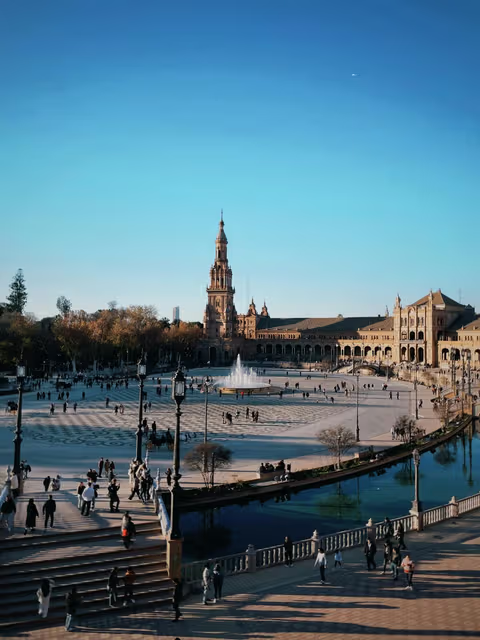
Aerial view of Seville's Plaza de España
VIII

Plaza de España and Parque de María Luisa

A monumental 1929 plaza with a navigable canal, colonnades and tiled benches representing all forty-nine provinces. A horse-drawn carriage tour of the historic centre, best at sunset.

Seville · sunset
Gardens and fountains in Spain
IX

La Rioja Alavesa wineries

Vertical tasting at Marqués de Riscal with its Frank Gehry hotel, at Calatrava's Bodegas Ysios and at less-touristed family estates like López de Heredia. Spain's most celebrated wine, in its landscape.

La Rioja · full day
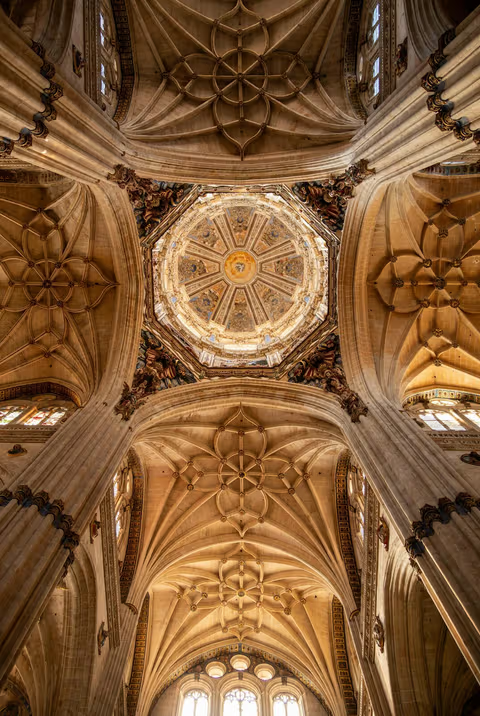
Salamanca Cathedral, a UNESCO World Heritage city
X

UNESCO heritage cities by AVE

Toledo 33 minutes away, Segovia 25, Salamanca with its cathedral, Ávila and its walls. Full-day UNESCO World Heritage city day trips from Madrid, each with a distinct identity and a specialist guide.

Castile · day trips
Hotels

Eighteen signature hotels

Boutique hotels, paradores in monasteries and castles, and grand luxury houses. Not simply "the most famous" in the country — these are the ones that open doors and understand the CocoVolare rhythm.

Mandarin Oriental Ritz
Plaza de la Lealtad · Madrid
The historic Ritz reimagined as a grand luxury hotel, with suites overlooking the Prado and the two-Michelin-star restaurant Deessa.
Four Seasons Madrid
Canalejas · Madrid
Seven restored historic buildings at the city's heart, with a spa, rooftop and luxury shopping arcade.
Hotel Único Madrid
Barrio de Salamanca · Madrid
Boutique hotel in a 19th-century mansion in the most elegant district, with a private garden and a Michelin-starred restaurant.
URSO Hotel & Spa
Chamberí · Madrid
Boutique hotel in an early 20th-century palace, with a Natura Bissé spa and a quiet residential feel.
Hotel Arts Barcelona
Port Olímpic · Barcelona
Seafront tower with high-floor suites and the two-Michelin-star Enoteca Paco Pérez.
Mandarin Oriental Barcelona
Passeig de Gràcia · Barcelona
Grand luxury on the Modernist axis, with a spa open to non-guests and a rooftop pool.
Hotel Casa Fuster
Passeig de Gràcia · Barcelona
A Domènech i Montaner Modernist building with a rooftop perfect for sunset and a live-music café.
Cotton House Hotel
Gran Via · Barcelona
The former headquarters of the cotton guild reinvented as a boutique hotel, complete with a library and its own tailoring room.
Hotel Alfonso XIII
Centre · Seville
A neo-Mudéjar building from 1929 — Seville's landmark hotel — with an Andalusian patio and a Royal Suite overlooking the Giralda.
Hotel EME Catedral Mercer
Santa Cruz · Seville
A cluster of palace houses facing the Cathedral, with a rooftop terrace with Giralda views and a spa.
Parador de Granada
Alhambra grounds · Granada
A former convent of San Francisco inside the Alhambra walls — one of Spain's truly unrepeatable hotel experiences.
Hospes Las Casas del Rey de Baeza
Centre · Seville
An 18th-century tenement house restored, with whitewashed courtyards, a rooftop pool and a neighbourhood calm.
La Bobadilla, a Royal Hideaway
Loja · Granada
A luxury Andalusian cortijo among olive groves, with its own chapel, a spa and a base for the white villages.
Hotel María Cristina
Centre · San Sebastián
Donostia's historic hotel on the Urumea riverfront, home of the Film Festival, steps from the old town.
Hotel Marqués de Riscal
Elciego · La Rioja Alavesa
Frank Gehry's 2006 sculptural building among the vineyards, with vertical tastings and a Michelin-starred restaurant.
Gran Hotel Domine Bilbao
Abandoibarra · Bilbao
Design hotel directly opposite the Guggenheim, with a rooftop terrace overlooking Gehry's museum and the estuary.
Hotel Viura
Villabuena de Álava · La Rioja
Contemporary-architecture boutique hotel in a wine village of 250 inhabitants, surrounded by family wineries.
Caro Hotel
Ciutat Vella · Valencia
Boutique hotel built over Arab and Roman city-wall remains, with a chef-driven kitchen and minimalist design.

We work with additional properties at castle and monastery paradores, Andalusian haciendas and private residences. The final selection depends on the travel profile.

Flavour

Spanish flavour

From the neighbourhood tortilla to the three-star tasting menu. Spanish cuisine is not one thing — it is many in dialogue, and the average quality of a Spanish bar is probably the highest in Europe. A country where the long after-lunch conversation is a national sport.

Disfrutar

Eixample · Barcelona

The world's best restaurant in 2024 according to The World's 50 Best. Technically dazzling cuisine, heir to El Bulli, by three former El Bulli chefs. Book four months ahead.

Asador Etxebarri

Atxondo · Basque Country

Bittor Arginzoniz's wood-fire cooking of exceptional produce — one of the world's most talked-about gastronomic experiences. Book six months ahead.

El Celler de Can Roca

Girona · Catalonia

Three Michelin stars and twice named the world's best restaurant by the Roca brothers. Cuisine, pastry and wine in perfect balance.

DiverXO

Barrio de Salamanca · Madrid

Dabiz Muñoz's three stars — Spain's most liberated and provocative cooking. A conceptual journey without a safety net.

Sobrino de Botín

Cuchilleros · Madrid

Open since 1725 — the world's oldest continuously operating restaurant according to Guinness. Roast suckling pig and lamb in a wood-burning oven.

La Cuchara de San Telmo

Old town · San Sebastián

Michelin-level pintxos at bar prices: braised veal cheek in red wine, foie and impeccable Basque produce.

Not to be missed

Valencian paella
The icon of the huerta · rice, chicken, rabbit, green beans and garrofó · orthodox only in Valencia, served at midday
Ibérico ham de bellota
Acorn-fed Ibérico pig raised in the dehesa · 36-month curing · thin slices hand-carved with a long knife
Tortilla de patatas
Potato, egg and olive oil · with or without onion depending on your school · slightly undercooked, runny in the centre
Basque pintxos
The northern tapa — small and technically precise · gilda, tortilla, braised cheek · a crawl from bar to bar
Pulpo a la gallega
Octopus boiled in a copper pot and served on a wooden board · coarse salt, paprika and olive oil · a festival staple
Gazpacho and salmorejo
Cold soups of the south that cool the Andalusian summer · tomato, olive oil, bread · pure vegetable garden
Calendar

Eight dates worth travelling for

A well-chosen moment turns a trip into a memory. We design your itinerary around the experience that matters most to you.

Mar · Apr

Holy Week

Historic brotherhood processions in Seville, Málaga, Granada and Córdoba, carrying 17th-century sacred figures with drums and saetas sung from balconies above.

15–19 March

Las Fallas de Valencia

Monumental wooden and papier-mâché sculptures burned on the final night. Fireworks, paella and the mascletà. UNESCO Intangible Cultural Heritage.

April

Feria de Abril

Casetas, flamenco dress, sevillanas, fino wine and horses in Seville. The south at its most festive and luminous.

May

Patios de Córdoba

Private flower-filled courtyards open for an official competition. Córdoba becomes a hanging garden of geraniums.

Jun · Jul

Granada Festival

The International Festival of Music and Dance brings concerts to the courtyards of the Alhambra — culture on the most beautiful stage in the country.

6–14 July

San Fermín

The running of the bulls through the streets of Pamplona. Legendary and requiring six months' advance booking. Worth witnessing once.

September

San Sebastián Film Festival

One of the world's five Class A film festivals. The pintxo capital fills up with cinema and long lunches.

Year-round

Camino de Santiago

The millennia-old pilgrimage to Santiago de Compostela. Best in May and September, in boutique format with paradores and luggage transfer.

CocoVolare Travellers

Testimonials from those who have already flown with us

Real reviews from clients, rotating automatically.

★ 5 verified testimonials

What those who have flown with us say

Real stories from CocoVolare travellers in Spain. Rotating every 6 seconds. Pauses on hover.

4.9out of 5 · rating
98%recommend
★★★★★

We entered the Prado an hour before opening and stood alone in front of Las Meninas with a museum conservator. Then the Alhambra at sunset, no queues. CocoVolare doesn't sell monuments — it sells the monument with no one else around.

M

Mariana Restrepo · Bogotá

Honeymoon · 10 nights

Trip: Seville, Granada, Barcelona and Costa Brava

★★★★★

The AVE from Madrid to Seville in two and a half hours, the private car to Granada with every detail planned, the guide waiting at every station. We didn't lose a single hour of the trip to logistics. That's what you pay for.

J

Javier Mendoza · Mexico City

Couples' trip · 10 nights

Trip: Madrid, Seville, Granada, San Sebastián and Barcelona

★★★★★

Our Alhambra guide had a degree in Art History from the University of Granada. He didn't recite dates — he told us the story of al-Andalus. The difference between photographing red walls and understanding an entire kingdom.

A

Andrés Lozano · Medellín

Cultural journey · 12 nights

Trip: Madrid, Andalusia and La Rioja

★★★★★

I travelled alone and never felt alone. The driver, the guides, the concierge — by the third day they all knew my name. Spain is safe and CocoVolare builds an invisible network that holds the whole trip together without you ever noticing it.

C

Carolina Vidal · Buenos Aires

Solo journey · 9 nights

Trip: Madrid, Seville and Barcelona

★★★★★

We had pintxos in San Sebastián, then Etxebarri and then Disfrutar. I thought I knew European food. Spain showed me that the continent's best value for money was south of the Pyrenees.

L

Lucía Fernández-Salas · Lima

Flavour route · 7 nights

Trip: San Sebastián, La Rioja, Barcelona and Seville

Questions

Questions we are genuinely happy to answer

No unnecessary disclaimers, no inflated marketing copy. These are the questions Spain travellers ask us most.

Do I need a visa to travel to Spain?
Travellers from Colombia, Mexico, Argentina and most of Latin America do not need a visa for tourist stays of up to 90 days within the Schengen Area — a valid passport is sufficient. Once in force, the ETIAS online travel authorisation will be required — a process that takes only a few minutes. Your passport must have at least six months of remaining validity. Immigration rules change: verify before travel.
What is the best time to visit Spain?
May, June and September are the best months: mild weather, long days, peak gastronomy in full swing and far less crowding than July or August. April and October are shoulder months with good value and splendid photographic light, with the occasional rainy day in the north. It is best to avoid July and August in Seville, Córdoba and Madrid, where midday temperatures can top 40°C.
How many days do I need to see Spain?
Five days cover Madrid and Seville in a compact but coherent way. Seven to ten days allow you to add Granada, San Sebastián and Barcelona. Fourteen days open up La Rioja wine country and the Costa Brava or the Basque coast. CocoVolare designs itineraries from five to twenty-one days, tailored to your pace, profile and season.
How does the AVE high-speed train work?
Spain's AVE network is Europe's most extensive at over 4,000 km, connecting Madrid to nearly every regional capital in under four hours: Seville in 2h30, Barcelona in 2h45, Málaga in 2h40. It requires a numbered reserved seat — it is not a metro. Bought 60–90 days in advance, or with the low-cost operators Iryo and Ouigo, tickets cost a fraction of the walk-up fare.
Is it safe to travel to Spain?
Spain is one of the safest countries in the developed world: there is no risk of armed violence in any city. The only real issue is petty theft in heavily touristed areas such as Las Ramblas and the Barcelona metro, or the Puerta del Sol in Madrid. A cross-body bag at the front, wallet in a front pocket and phone never left on a café table will prevent 95% of incidents. Walking at night through the centres of Madrid, Barcelona or Seville is safe for all traveller profiles.
What currency is used in Spain and how should I pay?
The euro (EUR). Cards are accepted at 95% of establishments, including small tapas bars, and contactless payment is the dominant method. Carry between €50 and €150 in cash for markets, tips and small villages, withdrawn from an ATM using a multi-currency card like Revolut or Wise to minimise fees. Avoid tourist currency exchange booths.
Do I need to book the Alhambra and the Sagrada Família in advance?
Yes. The Alhambra in Granada has a strictly limited daily visitor quota and should be booked two to three months in advance. The Sagrada Família in Barcelona requires a specific time slot. CocoVolare manages admissions with Art History–graduate guides and, where possible, private out-of-hours access to the Prado, the Royal Alcázar in Seville or the Mosque-Cathedral of Córdoba at dawn.
How much does a boutique trip to Spain cost?
A boutique ten-day trip, excluding international flights, falls in the comfort band between USD 4,900 and 9,000 per person in double occupancy. CocoVolare signature itineraries start from USD 2,300 per person for five days. Spain offers the best gastronomic value-for-money in Europe: a three-Michelin-star menu costs 40–60% less than in Paris.
What time do people eat lunch and dinner in Spain?
Spanish mealtimes run later than the continental norm: a brief early breakfast, a substantial lunch from 2pm to 4pm and a late dinner from 9:30pm to 11pm. If you walk into a restaurant at 7:30pm you will be served, but it will be the first sitting and locals won't arrive until 10pm. CocoVolare books reservations on Spanish time so you eat where — and when — the city eats.
Can I travel to Spain with children?
Yes, and it works very well. Cities are safe and walkable, children's menus are honest and the late mealtimes adapt to family rhythms. CocoVolare adapts the itinerary with fewer museums per day and more storytelling: rowing on the Retiro lake, the Royal Palace with a children's audio guide, the Barcelona Aquàrium and guides who tell history as a story. Recommended from six years old upwards.
Is Spain a good destination for foodies?
It is one of the best in the world. The country has over 280 Michelin-starred restaurants — a number that, per capita, surpasses France and Italy. Disfrutar in Barcelona was named the world's best restaurant in 2024. But the real standout is not the fine dining — it is the average: the quality of a neighbourhood bar in Spain is probably the highest in Europe.
How does tipping work in Spain?
Tips are never legally required: hospitality staff earn a proper fixed salary, unlike the American model. The custom is €1–2 per person at a tapas bar, rounding up at a set-menu restaurant, 5–10% at a mid-range restaurant if service was good and 10–15% at a Michelin-starred restaurant if it was exceptional. In taxis, round up — no percentage expected.
What does a CocoVolare trip to Spain include?
Itinerary design from scratch, AVE tickets and domestic flights where applicable, boutique hotels and paradores with breakfast, private transfers with a driver, Art History–graduate guides, signature experiences, monument admissions with reserved time slots and 24/7 concierge. Every trip is designed from scratch to your profile, with zero templates.

Your Spain, your way

Tell us what excites you and we will have a tailor-made proposal in your hands in under 24 hours, with a dedicated travel designer.

Start your quote
Design your trip

Free quote

No commitment. We respond in under 24 hours with a personalised proposal.

★★★★★ 4.9 · 287 reviews
"I travelled alone and never felt alone. CocoVolare builds an invisible network that holds the whole trip together."· Carolina Vidal · Buenos Aires