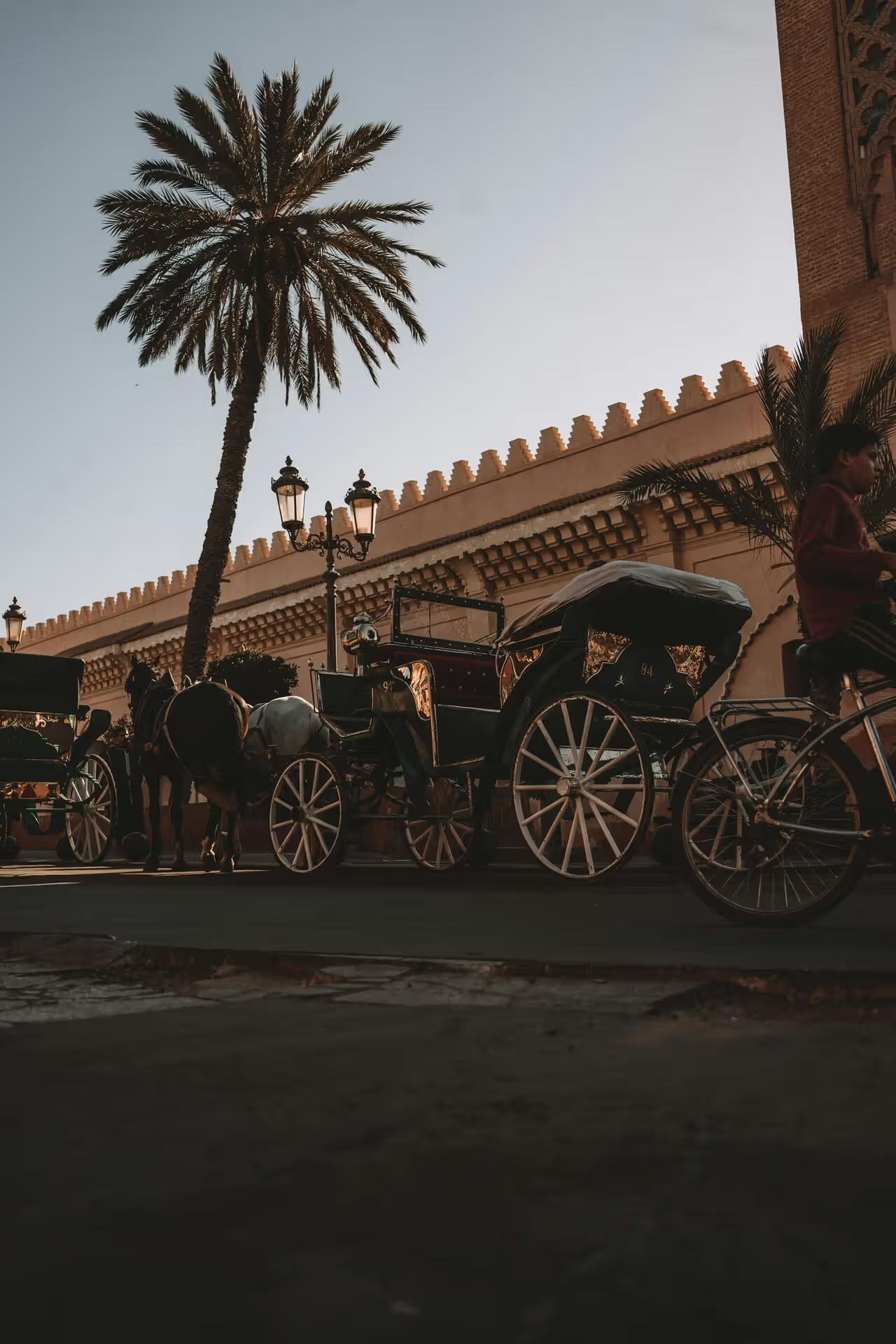
Red walls of Marrakech with palm trees at sunset · Morocco
Africa · Boutique

Morocco

Several destinations in one

Morocco is one of those countries that feels like several destinations at once. In a single week you can move from the labyrinth of the Fez medina — one of the most complete medieval cities still alive on the planet — to sleeping under a sky free of light pollution in a Sahara desert camp, and finish with waves and wind on the Atlantic coast. Souks that stimulate all five senses, filigree architecture, the blue of Chefchaouen, orange dunes and the Atlas Mountains with their Berber villages.

A country experienced through the senses

Morocco enters through the senses before it reaches the mind: the smell of cumin and charcoal rising from the stalls as evening falls, the ochre red of the walls shifting in tone with the hour, the ring of the coppersmith in the souk and, in the background, the calls to prayer. Against other North African destinations it holds several advantages: it is stable and accessible, with a mature tourism infrastructure — restored riads, modern trains, direct flights from Europe — and it offers a value-for-money ratio that is hard to match. It sits at a sweet spot: developed enough to travel comfortably and safely, yet with an authenticity that remains intact beyond the mass-market circuits. It is an author's destination: it does not work on autopilot, it works when someone curates it with discernment. The right riads, the right official guides, the right desert camp and a private driver who measures the distances.

9,000+alleyways in the Fez medina — no cars allowed
2 seascoastline on both the Atlantic Ocean and the Mediterranean
859year the University of al-Qarawiyyin was founded
9UNESCO World Heritage Sites
Regions

Five Moroccos within one country

The Red City, the spiritual capital, the Sahara dunes, the Atlas kasbahs and the imperial coast. Each region is a different Morocco, and the blue north of Chefchaouen joins longer itineraries. Combining them with discernment is the CocoVolare signature.

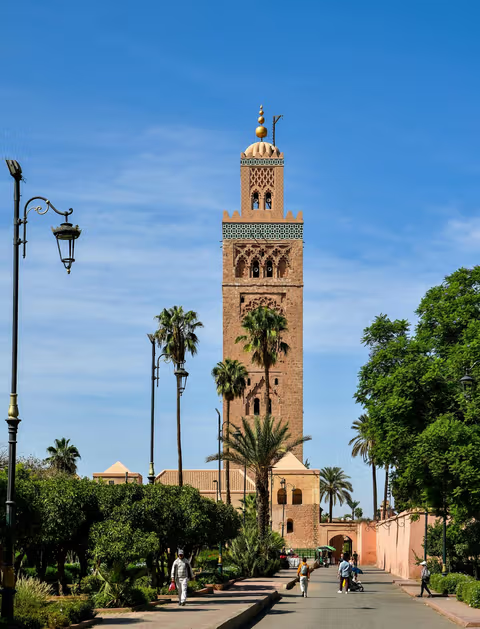
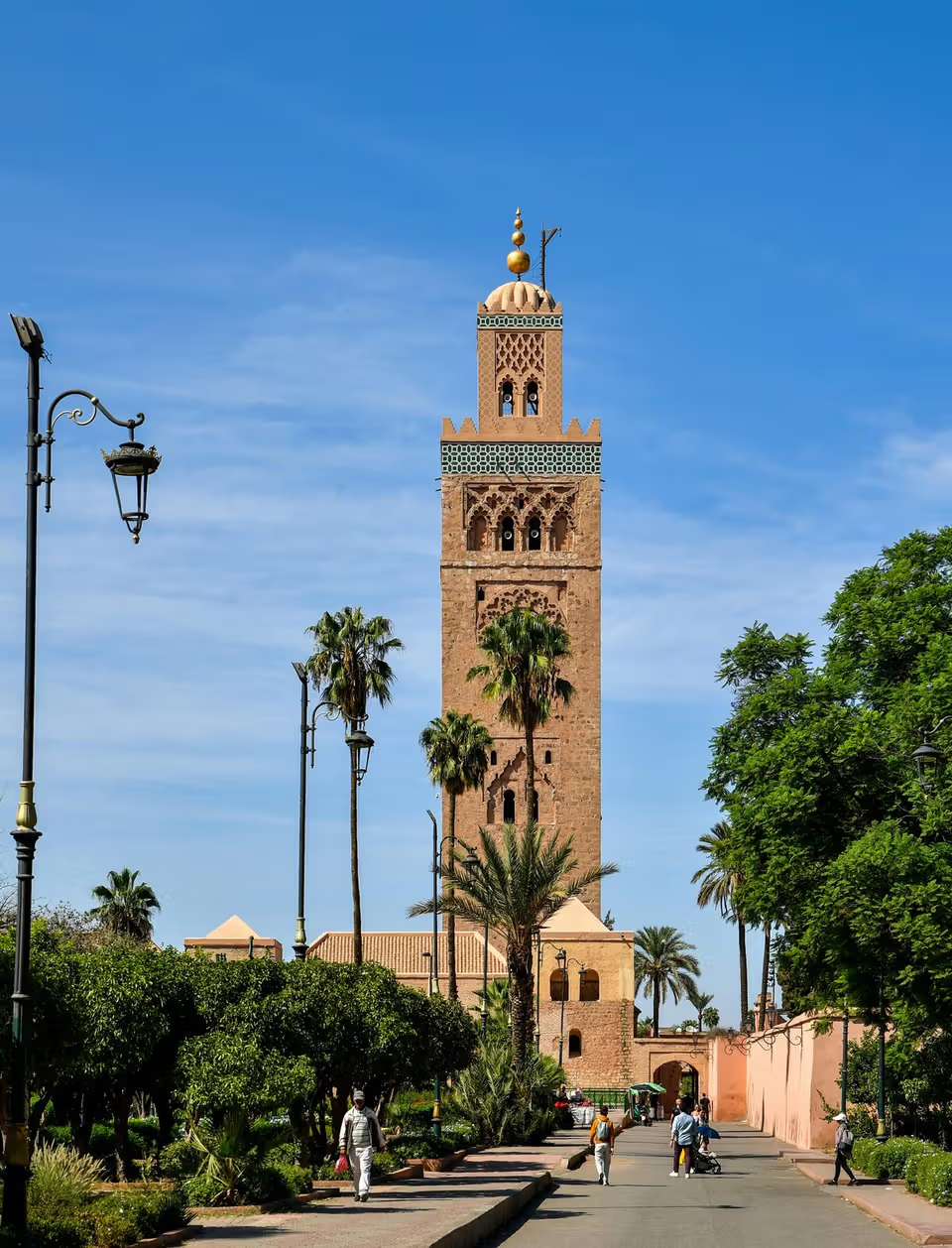
The Koutoubia minaret among palm trees in Marrakech 01 · Red City 3–4 nights

Marrakech

The city you absorb

Marrakech is not visited — it is absorbed. Founded in 1070 as a caravan crossroads between the Sahara and the Atlantic, it offers a collision of labyrinthine medina, gardens of absolute calm and a hotel and dining scene that reinvents itself every season.

Hotels
Royal Mansour · La Mamounia · El Fenn · Riad Joya
Must-see
Jemaa el-Fna · Majorelle Garden · Ben Youssef Madrasa
Best season
March to May · September to November
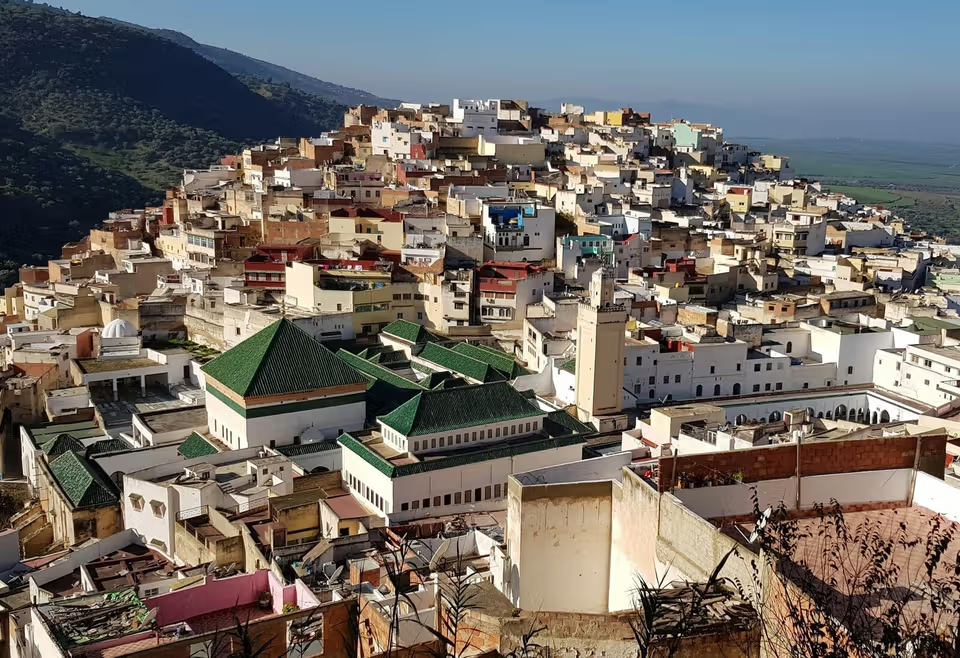
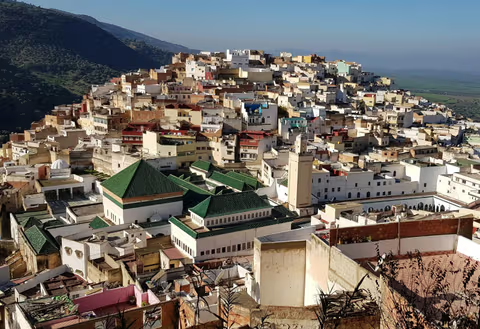
Aerial view of the Fez medina with its rooftops 02 · Imperial 2–3 nights

Fez

The spiritual and artisanal capital

Fez is the city where Morocco keeps its memory. Fes el-Bali, founded in the 8th century, is one of the most extensive inhabited medieval complexes in the world: a city that works, prays and cooks within its walls. Marrakech seduces; Fez demands.

Hotels
Palais Amani · Riad Fes · Karawan Riad
Must-see
Chouara Tanneries · al-Qarawiyyin · Marinid madrasas
Best season
April to May · September to October
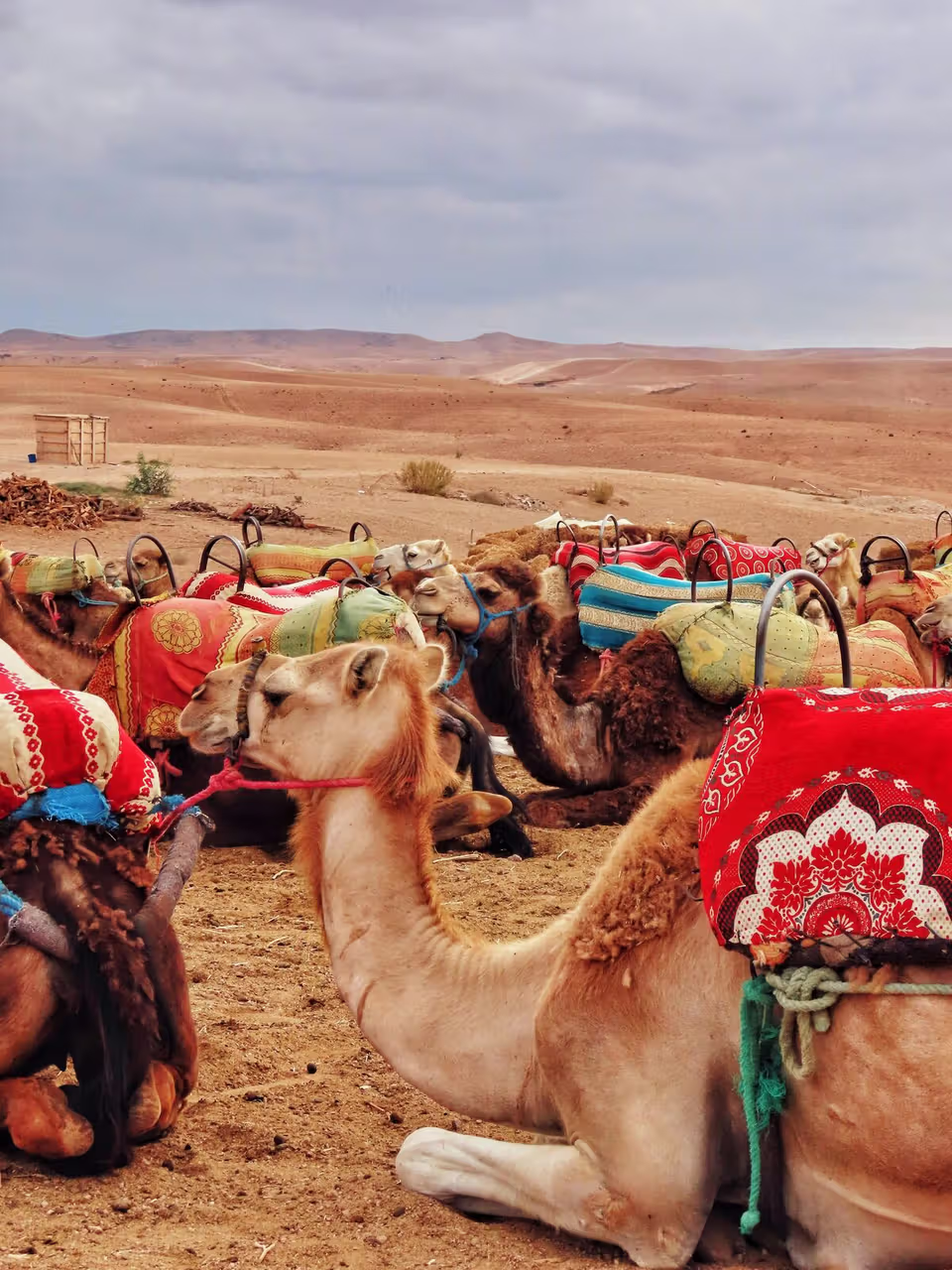
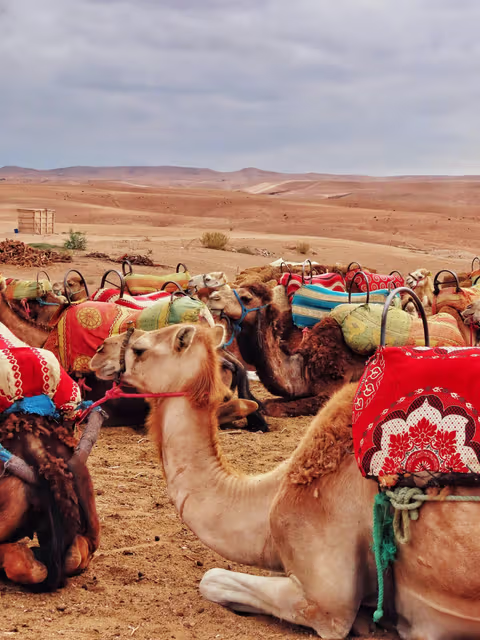
Camel caravan among the dunes of the Sahara Desert 03 · Desert 1–2 nights

The Sahara and Merzouga

Dunes, camps and a starlit sky

Sleeping among dunes in a desert camp — in the Erg Chebbi at Merzouga or the Erg Chigaga — is the image many associate with Morocco. Arriving by camel, dining under the stars, gnawa music and a sky free of light pollution.

Camps
Erg Chebbi Luxury · Azalai Camp · designer desert camps
Must-do
Sunrise on a dune · dromedary ride · gnawa night
Best season
October to April · cool nights, mild days
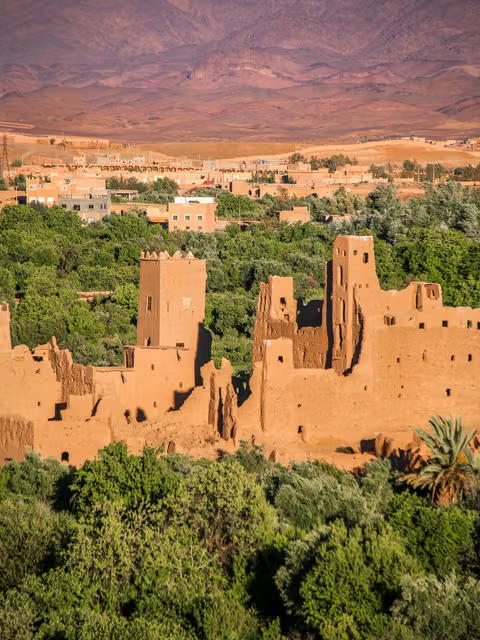
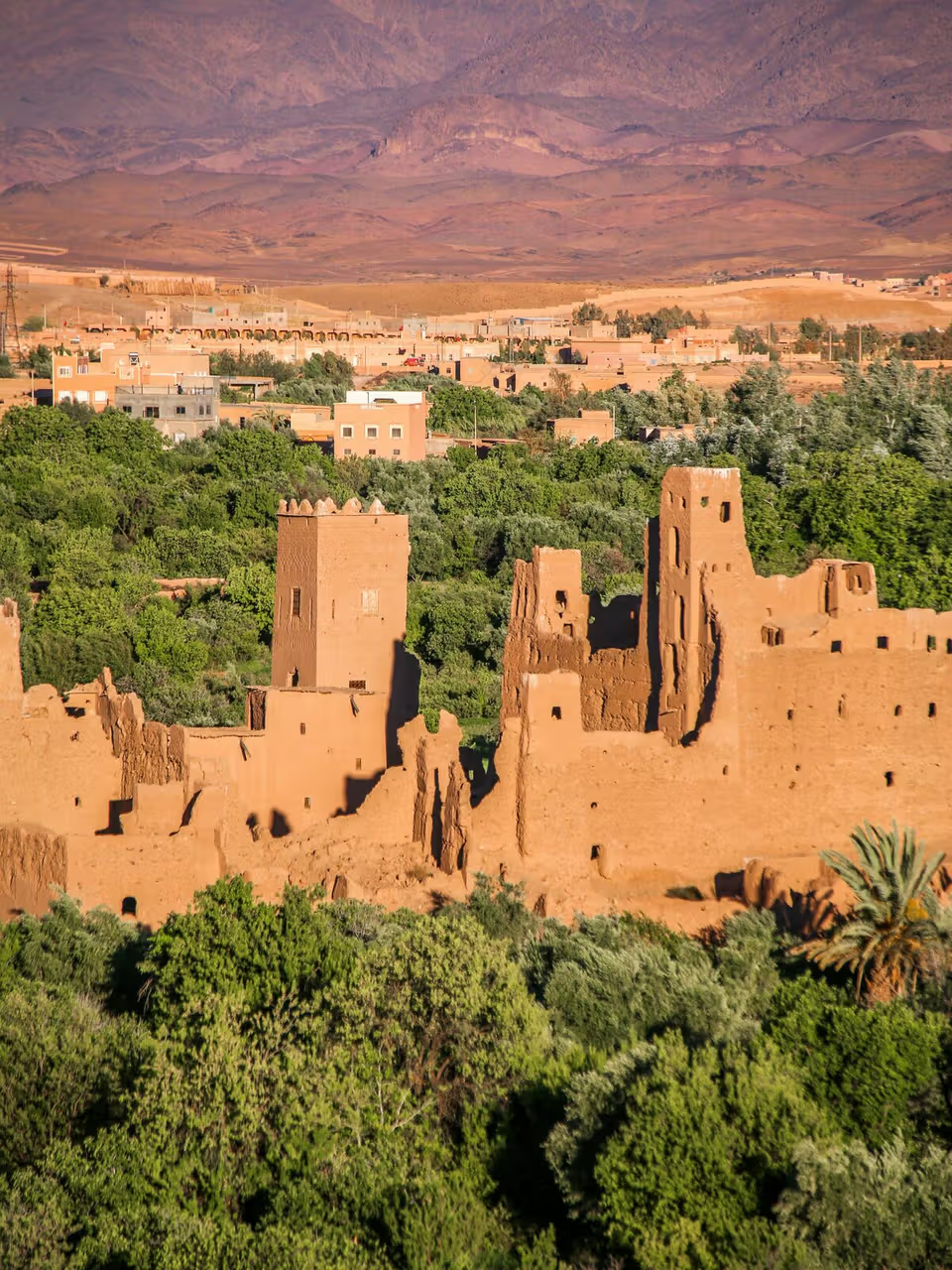
Adobe kasbah surrounded by a palm grove in the Atlas valley 04 · Mountains 1–2 nights

The Atlas Mountains and kasbahs

Berber villages and earthen fortresses

The Atlas range crosses the country and shelters Berber villages clinging to hillsides, terraced farmland and the Road of a Thousand Kasbahs heading south, with Ait Ben Haddou — a UNESCO earthen ksar and a film location.

Hotels
Kasbah Tamadot · Dar Ahlam · restored kasbahs
Must-see
Ait Ben Haddou · Ourika Valley · Todra Gorge
Best season
Spring and autumn · snow in winter
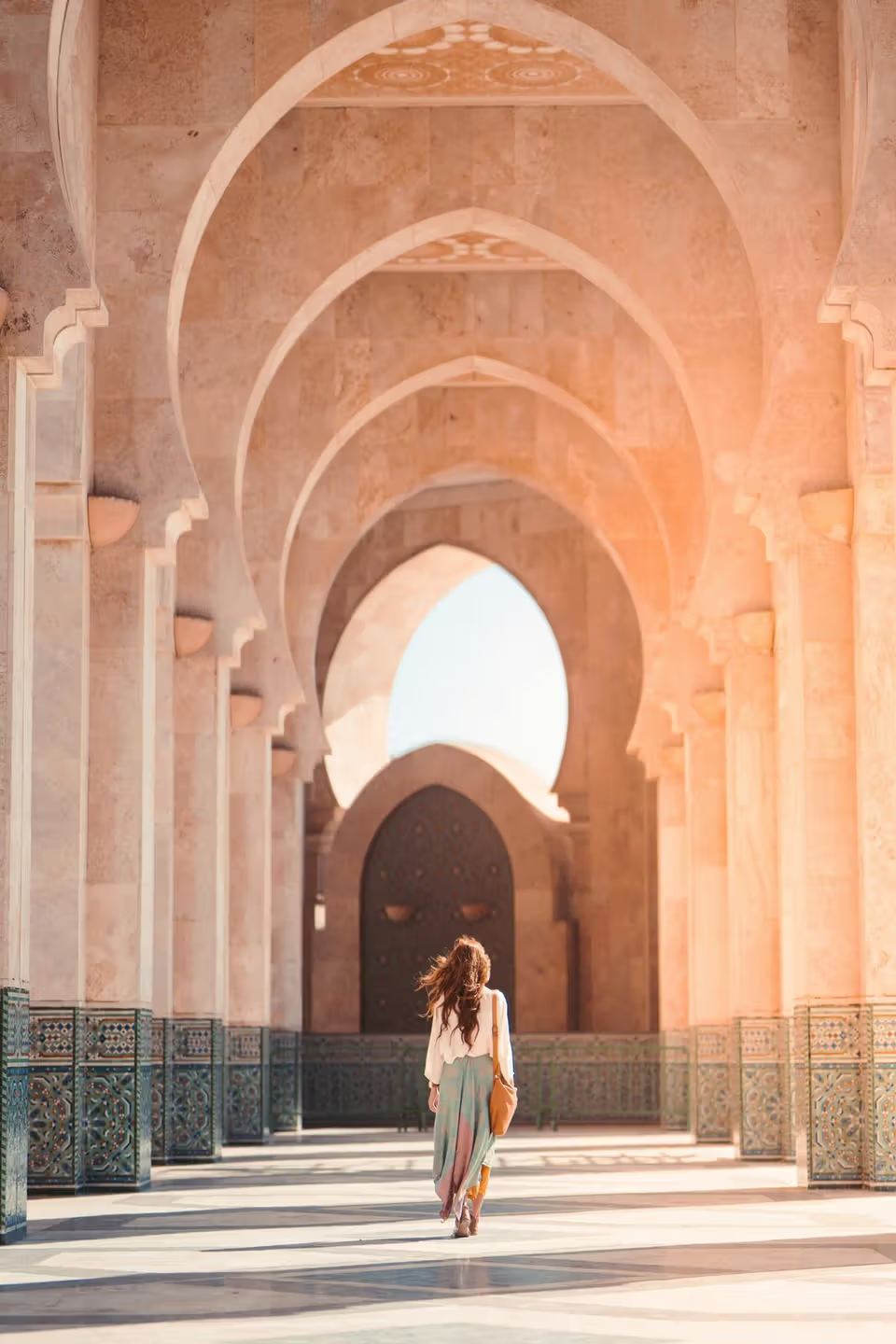
Islamic arches of the Moroccan imperial coast architecture 05 · Coast 1–2 nights

Rabat and Casablanca

The modern and imperial face

The Atlantic coast concentrates Morocco's modern face: Casablanca with the Hassan II Mosque overlooking the ocean — one of the largest in the world — and Rabat, elegant political capital, with the Hassan Tower and the Mausoleum of Mohammed V.

Hotels
Urban Mamounia · boutique hotels of Rabat
Must-see
Hassan II Mosque · Hassan Tower · Corniche
Best season
Year-round · temperate coast
Intermezzo

Sensory chaos and deep calm, at the same time.

Intense medinas of noise, spices, leather and mint, and just a few steps away the cool courtyard of a riad with a fountain and silence. Souks organised by guild, carved doors, zellige to the point of vertigo, orange dunes and adobe villages clinging to the Atlas. Morocco lives between the bustle and the pause, and that contrast is precisely its charm.

"In Morocco, food is offered the way welcome is offered: in abundance."· CocoVolare master document
MoroccoFiligree architecture
MarrakechThe medina souk
The southPalm groves and oases
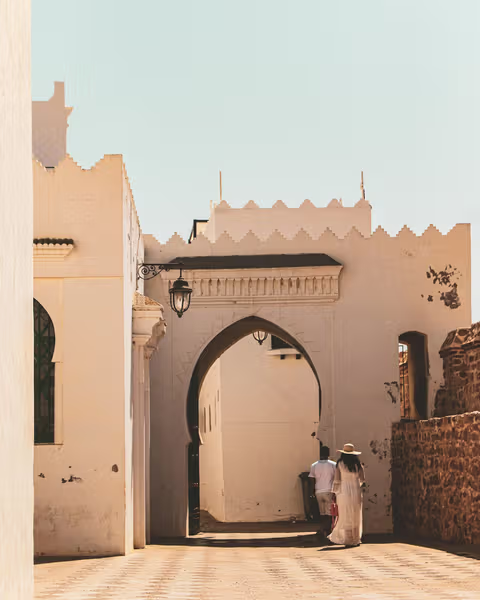
Imperial citiesWalls and palms
RabatThe Hassan Tower
RabatMausoleum of Mohammed V
RiadCourtyards and arches
CasablancaHassan II Mosque
Climate

When to go and why

Morocco has no single climate. The chart uses the imperial-cities-and-desert traveller as reference. Marked in gold, the windows we recommend experiencing Morocco with us · chosen for experience, not price.

The Atlantic coast is temperate, the interior with the imperial cities experiences sharp contrasts, and the desert is arid and extreme. The chart shows all twelve months with estimated cost, temperature and calendar highlights. Marked in gold, the windows we recommend experiencing Morocco with us.

Regional summary

Region
Winter (Dec–Feb)
Spring (Mar–May)
Summer (Jun–Aug)
Autumn (Sep–Nov)
Optimal window
Marrakech
Mild by day · 14°C
Ideal · 24°C
Extreme heat · 38°C
Comfortable · 26°C
Mar–May · Sep–Nov
Fez
Cold and damp · 12°C
Mild · 22°C
Stifling · 37°C
Pleasant · 24°C
Apr–May · Sep–Oct
Sahara (Merzouga)
Cold at night · 13°C
Perfect · 26°C
Extreme · 42°C
Optimal · 28°C
Oct–Apr
High Atlas
Snow · 5°C
Cool and floral · 16°C
Pleasant at altitude · 25°C
Mild · 18°C
Apr–Jun · Sep–Oct
Atlantic coast
Temperate · 17°C
Mild and breezy · 21°C
Cool and windy · 24°C
Pleasant · 23°C
Year-round · ideal in summer
Essentials

What you need to know before you go

Information verified by our travel designers, updated for 2026. Browse by category.

Currency Moroccan dirham (MAD). A closed currency: it cannot be purchased outside the country — exchange it on arrival (verify before travelling).
Mental rule Dividing a dirham price by 10 gives a rough euro approximation.
Cash Essential in souks, taxis and villages. Bring euros or dollars in good condition and exchange at banks or official bureaux de change.
Cards Work in riads, restaurants and formal city shops — not in souks or villages. Always carry small banknotes.
Bargaining In the souk, the first price is inflated three or four times. Offer between 30% and 40% and negotiate calmly.
Tips Between 5% and 10% in restaurants. Tips are customary for guides, drivers and riad staff.
Exemption Most Latin American and Spanish passports are exempt from visa requirements for tourist stays of up to 90 days.
Exceptions Some passports do require a visa. Always confirm with the Moroccan embassy or consulate before travelling.
Passport Must be valid for at least six months on entry. Entry and exit forms may need to be completed on arrival and departure.
Extension Tourist stays can usually be extended for a further 90 days through the immigration office within the country.
Authorisations Temporary electronic authorisations have been required during major events. Check whether any requirement is currently in effect.
Vaccines No vaccines are generally required for entry from Latin America or Spain under normal conditions.
Insurance Highly recommended — practically essential: it should cover medical assistance, repatriation and treatment at private clinics.
Water Better to avoid tap water: drink sealed bottled water, including when brushing teeth. Be careful with ice of uncertain origin.
Heat The main risk is summer heat. Sun protection, a hat and constant hydration — especially in the desert.
Pharmacies Plentiful, well-stocked and with qualified staff. They function as first-line consultations for minor issues; there are always pharmacies on duty.
Train Good ONCF rail network between cities. The Al Boraq high-speed train between Tangier and Casablanca is among the most advanced in Africa.
Private driver The CocoVolare standard for the Atlas and the desert: 4x4 vehicle with driver between imperial cities and kasbahs.
Domestic flights Royal Air Maroc connects Marrakech, Fez and Casablanca. One hour by air saves seven by road.
Taxis Petit taxis within cities, grand taxis between towns. Agree a fare or insist on the meter; Bolt works in major cities.
Medinas Everything within the old towns is on foot — no cars or taxis. Riads arrange luggage collection at a road-accessible point.
Official languages Arabic and Amazigh (Berber). French is widely spoken and works in almost any context.
Spanish Helpful in the north of the country, thanks to the region's historical heritage.
English Works in hotels, riads and tourist areas. With gestures and a few words of Arabic you can go far.
Vocabulary Shukran (thank you) · salam alaikum (hello) · la (no) · na'am (yes). In Berber areas: azul (hello).
Detail CocoVolare works with certified official guides fluent in Spanish or English for all key experiences.
Right hand Always greet, eat and hand things over with the right hand. The left is considered impure.
Photography Do not photograph people — especially women and market vendors — without asking permission. It is experienced as an invasion.
Dress Shoulders and knees covered in villages and religious sites. In tourist medinas and riads there is more freedom.
Mint tea Accepting the welcome tea is a ritual gesture of hospitality. Flatly refusing it can feel discourteous.
Ramadan During the month of fasting, be discreet about eating, drinking or smoking in public during the day.
Itineraries

Six Moroccos — choose yours

Six signature itineraries matched to your dates, pace and budget. Zero templates · every one rewritten 100% to your measure. Prices per person in double occupancy, boutique category, excluding international flights.

None of these quite fits? We design one from scratch.

We tailor itineraries for honeymoons, families with children or teenagers, foodies, slow travellers, Toubkal summit trekkers and Atlantic coast surfers. Zero templates. A quote within 24 hours from a dedicated travel designer.

Start your quote
Experiences

Ten moments worth going out of your way for

These are not tours. They are private access, certified official guides and a pace set to yours. Ten experiences worth planning a journey around.

Dromedary among the dunes of the Sahara Desert
I

A night in the Sahara

Sleeping among dunes in a desert camp — in Erg Chebbi or Erg Chigaga — is the image many associate with Morocco. Arriving by camel, dining under the stars and a sky free of light pollution.

Merzouga · October to April
Lone walker on the desert dunes at sunset
II

Sunset over the dunes

Walking barefoot through the orange sand as the sun drops and the desert changes colour within minutes. The thermal contrast of the Sahara — hot by day, cold by night — is a phenomenon in itself.

Erg Chebbi · sunset
Arched alleyway in the Fez medina
III

Getting lost in the Fez medina

More than nine thousand alleyways make up the country's most extensive inhabited medieval quarter. This is not a museum: it is a working city, where the laden donkey is the real logistics system. The first visit — with an official guide.

Fez · half day
Spice stall in a Moroccan souk
IV

The souks of Marrakech

A labyrinth of themed alleyways: leather, spices, lamps, textiles, babouches, copperware. Each guild has its own quarter and its own sound. Getting lost here is part of the plan; bargaining is part of the conversation.

Marrakech · morning
Colourful babouches in a Moroccan souk
V

Living craftsmanship

Morocco is one of the world's great craft nations and its traditions remain alive: babouches, leather, repoussé copper, Rif and Atlas textiles. Visiting real workshops — not commission shops — is a first-rate cultural experience.

Fez and Marrakech · half day
The Koutoubia minaret with Moroccan flags
VI

The Koutoubia and monumental Marrakech

The 12th-century minaret that defines the city's skyline, the Bahia Palace with its courtyards and painted cedar ceilings, and the Saadian Tombs with their extraordinarily refined funerary decoration.

Marrakech · morning
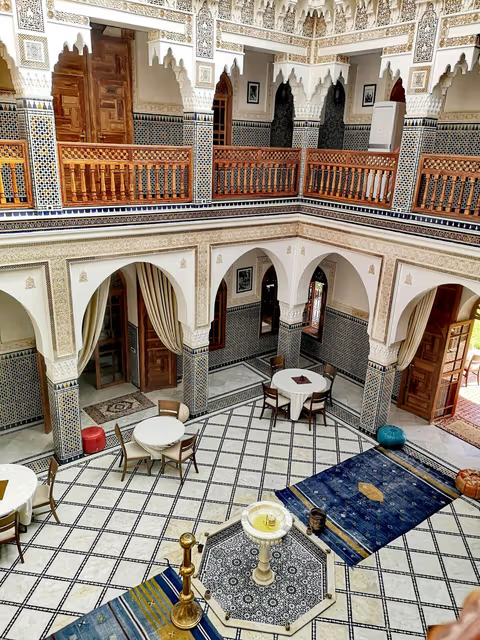
Inner courtyard of a Moroccan riad with arches
VII

Staying in a riad

You enter through an unassuming door in an anonymous alleyway and suddenly a cool courtyard opens before you — fountain, mosaic and silence. That contrast between the austere facade and the cared-for interior is quintessentially Moroccan.

Marrakech and Fez · stay
Adobe kasbah in the Moroccan Atlas
VIII

The Atlas kasbahs

Crossing the High Atlas via the Tizi n'Tichka pass leads to Ait Ben Haddou — a UNESCO earthen ksar and film location — and the Road of a Thousand Kasbahs among red canyons and palm-fringed oases.

High Atlas · full day
Carved door and zellige of Moroccan architecture
IX

Zellige and Islamic art

The zellige — hand-cut geometric mosaic — hand-carved stucco and worked cedar of Fez's Marinid madrasas are the pinnacle of Moroccan Islamic art. One hour with a master craftsman is worth more than ten souvenir shops.

Fez · morning
Arches of a great Moroccan mosque's architecture
X

The Hassan II Mosque

One of the world's largest mosques, built over the Atlantic Ocean in Casablanca. Among the few that admit non-Muslim visitors on a guided tour, offering a close-up view of the finest Moroccan craftsmanship.

Casablanca · day
Hotels

Eighteen signature addresses

Every riad, kasbah and camp is part of our private network with confidential rates. These are not simply the most famous — they are the ones that open doors and understand the CocoVolare rhythm.

Royal Mansour
Medina · Marrakech
Multi-storey private riads with their own courtyard, gardens and monumental spa. A work of craftsmanship in itself.
La Mamounia
Medina · Marrakech
The city's historic hotel, with century-old gardens, a spa and several Moroccan fine-dining tables.
El Fenn
Medina · Marrakech
Design riad with an art collection, terraced rooftops and hidden pools behind anonymous doors.
Riad Joya
Medina · Marrakech
Intimate and highly personal boutique riad in the heart of the medina, with dedicated service.
La Maison Arabe
Medina · Marrakech
Historic riad with its own cookery school and hammam — one of the city's most characterful addresses.
Palais Amani
Fes el-Bali · Fez
Interior garden, hammam and Moroccan art-deco atmosphere, with one of the finest terraces over the medina.
Riad Fes
Fes el-Bali · Fez
Palace-riad with multiple terraces and a pool, offering panoramic views over the medina and minarets.
Karawan Riad
Fes el-Bali · Fez
Restored boutique riad next to al-Qarawiyyin University, serene and with attentive service.
Dar Roumana
Fes el-Bali · Fez
Intimate riad with one of the city's finest dining tables and views over the medina rooftops.
Erg Chebbi Luxury Camp
Merzouga · Erg Chebbi
Designer camp at the edge of the great dunes, with comfort tents and dinner under the stars.
Azalai Desert Camp
Erg Chigaga
Boutique camp in the remote Chigaga desert, far from the mass-market circuits, with Berber music.
Dar Ahlam
Skoura · oasis
Luxury kasbah-garden in the Skoura palm grove, with no fixed menu: every experience designed to order.
Kasbah Tamadot
Asni Valley · High Atlas
Luxury kasbah deep in the mountain range, with pools overlooking the valley and snowy peaks.
Kasbah Bab Ourika
Ourika Valley · Atlas
Adobe eco-lodge on a hilltop with 360-degree views over the valley and the Atlas range.
Kasbah Ellouze
Ait Ben Haddou
Restored kasbah facing the ksar — perfect for photographing Ait Ben Haddou at dawn without groups.
Heure Bleue Palais
Medina · Essaouira
Iconic riad within the UNESCO medina of Essaouira, with a rooftop pool and Atlantic views.
L'Heure Bleue Marina
Essaouira · coast
Boutique facing the blue harbour — a base for fresh fish, wind and Atlantic water sports.
Lina Ryad & Spa
Medina · Chefchaouen
Accommodation with an indoor pool and hammam in the Rif's blue pearl — a rare luxury in this mountain city.

We work with additional iconic riads, restored kasbahs in the Drâa Valley and privatisable desert camps. The final selection depends on your travel profile.

Flavour

Moroccan flavour

From the brochette stall on the square to a chef's menu that reimagines the tajine. Moroccan cuisine is one of the world's great traditions: Berber foundations, Arab heritage, Andalusian refinement and slow fire. It is not spicy — it is deeply aromatic.

Nomad

Medina · Marrakech

Modern rooftop terrace with reimagined Moroccan cooking and a direct view over the spice souk. Accessible contemporary fine dining.

Le Jardin

Medina · Marrakech

Restaurant with a plant-filled Andalusian courtyard, honest Moroccan cooking with market ingredients.

Le Trou au Mur

Medina · Marrakech

Domestic Moroccan recipes rarely seen on restaurant menus — home-style dishes and forgotten specialities.

The Ruined Garden

Fes el-Bali · Fez

A restored garden within the medina, unhurried Fassi cooking and Moroccan mezze in the open air.

NUR

Fez

Contemporary Moroccan cuisine with seasonal produce — a tasting menu that reinterprets the classic repertoire.

Food stall dinner · Jemaa el-Fna

Marrakech

The country's largest open-air dining room: choose a stall, sit on a bench and eat amid smoke and bustle.

Not to be missed

Tajine
A slow-cooked stew in a conical clay pot · different in every home across the country
Couscous
Steamed semolina with vegetables and meat · the communal Friday dish and celebration staple
Pastilla
Thin pastry, sweet and savoury at once, with chicken and almonds · the pinnacle of Fassi urban cooking
Harira
Thick soup of tomatoes, lentils and chickpeas · the soup with which the fast is broken during Ramadan
Mechoui
Lamb slow-roasted until it falls apart · a festive dish, eaten by hand with bread
Mint tea
The national drink and a social gesture · poured from height to aerate it, a symbol of hospitality
Calendar

Eight dates worth travelling for

A well-chosen moment turns a trip into a memory. We design your itinerary around the experience that matters most to you. The Islamic calendar is lunar and shifts dates each year.

Feb–Mar

Almond Blossom

The Atlas valleys are covered in almond blossom before spring — a brief window of colour in the Moroccan countryside.

Mar–May

Best season

Optimal climate for the imperial cities and the desert. Clean light for photography and long days.

Apr–May

Rose Festival

The Valley of Roses at Kelaat M'Gouna celebrates the Damascus rose harvest with processions and music.

Variable

Ramadan

The month of fasting shifts schedules and atmosphere: life moves into the night, after the breaking of the fast.

June

Gnaoua Festival of Essaouira

The major gathering of gnawa music — rooted in sub-Saharan traditions and spiritual trance — on the Atlantic coast.

Jun–Aug

Surf and wind season

The Atlantic coast — Taghazout and Essaouira — enjoys its finest surf and wind season during the warmer months.

Oct–Apr

Desert season

The best window for the Sahara: bearable days, cool nights and skies thick with stars.

Dec–Feb

Snow in the High Atlas

Winter covers the mountains in snow, with ski resorts near Marrakech and alpine landscapes.

CocoVolare Travellers

Testimonials from those who have already flown with us

Real reviews from clients, rotating automatically.

★ 5 verified testimonials

What those who have flown with us say

Real stories from CocoVolare travellers in Morocco. Rotating every 6 seconds. Pauses on hover.

4.9out of 5 · rating
98%recommend
★★★★★

We arrived at the desert camp at sunset on camelback. When the last light faded, the Saharan sky filled with more stars than we had ever seen. We dined to gnawa music and slept in a tent. CocoVolare had measured every detail with precision.

M

Mariana Restrepo · Bogotá

Honeymoon · 10 nights

Trip: Marrakech, the Atlas and the desert

★★★★★

The Fez medina is a labyrinth of nine thousand alleyways. Without the official guide we would have been lost for hours; with him, we understood the city's logic, its crafts, the reason behind every doorway. That difference changed everything.

J

Javier Mendoza · Mexico City

Couple's journey · 10 nights

Trip: Marrakech, the desert and Fez

★★★★★

We slept in riads hidden behind anonymous doors: outside, an earthen alleyway; inside, a cool courtyard with a fountain and mosaics. That contrast between street and interior was the most Moroccan thing we experienced.

A

Andrés Lozano · Medellín

Cultural journey · 14 nights

Trip: Marrakech, Fez, the Rif and the coast

★★★★★

I travelled alone and never felt alone. The driver, the guides in each city, the team at every riad: by the third day they knew my name. CocoVolare builds an invisible network that holds the whole trip together.

C

Carolina Vidal · Madrid

Solo journey · 9 nights

Trip: Marrakech, the Atlas and Essaouira

★★★★★

We cooked a tajine in a family home, with the dada explaining every spice, and another evening we dined stall by stall at Jemaa el-Fna. In Morocco, food is offered the way welcome is offered. That you don't forget.

L

Lucía Fernández-Salas · Madrid

Flavours route · 7 nights

Trip: Marrakech and Fez

Questions

Questions we are genuinely happy to answer

No unnecessary disclaimers, no inflated marketing copy. These are the questions Morocco travellers ask us most.

Do I need a visa to enter Morocco?
Most Latin American and Spanish passports are exempt from visa requirements for tourist stays of up to 90 days, but some do require one. Always confirm with the Moroccan embassy or consulate before travelling. Your passport must have at least six months of validity remaining. During major events, temporary electronic authorisations have been required: check whether any is currently in effect.
What is the best time to visit Morocco?
The best windows are March to May and September to November, when heat is manageable in the imperial cities. The desert is best enjoyed October to April. Summer is avoided due to extreme heat in the interior, although the Atlantic coast of Essaouira and Tangier remains pleasant thanks to the wind.
How many days do I need to see Morocco?
Five days cover Marrakech, the Atlas and one desert night. Seven to ten days add Fez and the remote Erg Chigaga desert. Fourteen days allow for the Atlantic coast of Essaouira, Chefchaouen and the Rif. Distances are large — Marrakech to Fez is seven hours by road, so plan carefully.
What currency is used in Morocco?
The Moroccan dirham (MAD), a closed currency not sold outside the country: exchange it on arrival using euros or dollars in good condition. Cards work in riads, restaurants and formal city shops; in souks, taxis and villages, cash is essential. A useful rule: dividing a dirham price by 10 gives a rough euro approximation.
Is it safe to travel to Morocco?
Morocco is, broadly speaking, a safe country for tourism. Violent crime against foreigners is rare. What to anticipate, without alarm, are petty theft and low-level scams in busy areas: pickpockets in souks, false guides and inflated prices. Tourist medinas are safe by day and night with normal awareness.
How much does a trip to Morocco cost?
Morocco offers one of the best value-for-money ratios in the world. A boutique ten-day trip, excluding international flights, starts at around USD 2,300 per person in boutique riads with a private guide by segment and one desert camp night. CocoVolare signature itineraries start from USD 1,900 per person for five days.
How does bargaining in the souks work?
Bargaining is not optional: the first price is the opening of a conversation, not a final figure, and is typically inflated three or four times. A useful rule is to offer between 30% and 40% of the asking price and negotiate calmly, without pressure. Walking around without buying first helps you calibrate real prices.
Is it worth staying in a riad?
Yes — it is a large part of the trip. A riad, a traditional house with an inner courtyard, you enter through an unassuming door in an alleyway and find a cool courtyard with a fountain, mosaics and silence. Staying in an iconic riad in Marrakech or Fez is part of the cultural journey, not merely accommodation. CocoVolare arranges luggage collection at a road-accessible point.
Is it worth going to the Sahara Desert?
Yes — it is essential, but must be done properly. Day-trip excursions from Marrakech amount to three hours of bus, one hour on a camel and back: a stage set. To truly experience the Sahara, dedicate at least one or two nights in a camp. Erg Chigaga is more remote and less crowded than Erg Chebbi, at the cost of more hours on a piste.
Is Morocco safe for solo female travellers?
Morocco receives thousands of solo female travellers every year. The main discomfort is not crime but street comments, especially in the medinas. A CocoVolare trip includes a private driver, curated riads and official guides, and female guides can be requested. Dressing with shoulders and knees covered reduces unwanted attention.
Can you drink alcohol in Morocco?
Yes, it is legal for non-Muslims. It is sold in hotels, licensed riads, authorised restaurants and bars in modern areas — rarely in the traditional medina. Consumption is discreet: drinking in the street or appearing drunk in public is frowned upon given the weight of religious custom.
What does a CocoVolare trip to Morocco include?
Itinerary design from scratch, boutique riads and kasbahs with breakfast, 4x4 with private driver between cities and kasbahs, certified official guides, curated desert camps, signature experiences, private transfers and 24/7 concierge. Every trip is designed to your pace, profile, dates and budget.

Your Morocco, without a mould

Tell us what excites you and we will have a tailor-made proposal in your hands in under 24 hours, with a dedicated travel designer.

Start your quote
Design your trip

Free quote

No commitment. We respond in under 24 hours with a personalised proposal.

★★★★★ 4.9 · 287 reviews
"I travelled alone and never felt alone. CocoVolare builds an invisible network that holds the whole trip together."· Carolina Vidal · Madrid