+ Do I need a visa to enter Peru?
Travellers from Colombia, Mexico, Argentina, Chile, most of South America and Spain do not need a tourist visa for Peru. Immigration is managed digitally; keep the entry stamp in your passport, which must be valid for at least six months from the return date.
+ How does altitude sickness affect a trip to Cusco and Machu Picchu?
Cusco sits at 3,400 metres and altitude is not negotiable. CocoVolare designs the itinerary to acclimatise first in the Sacred Valley (2,800 m), which is lower, with coca tea, hydration and a gentle first day. Machu Picchu, at 2,400 m, is more comfortable. Cusco’s boutique hotels offer oxygen as a courtesy.
+ What is the best time to travel to Peru?
May to September is the dry season in the Andes: sunny days, cold nights and trekking routes in good condition. April and October are shoulder months with good weather and fewer travellers. February is avoided: the Inca Trail closes all month and the rains in the highlands are heavy.
+ Do I need to book Machu Picchu in advance?
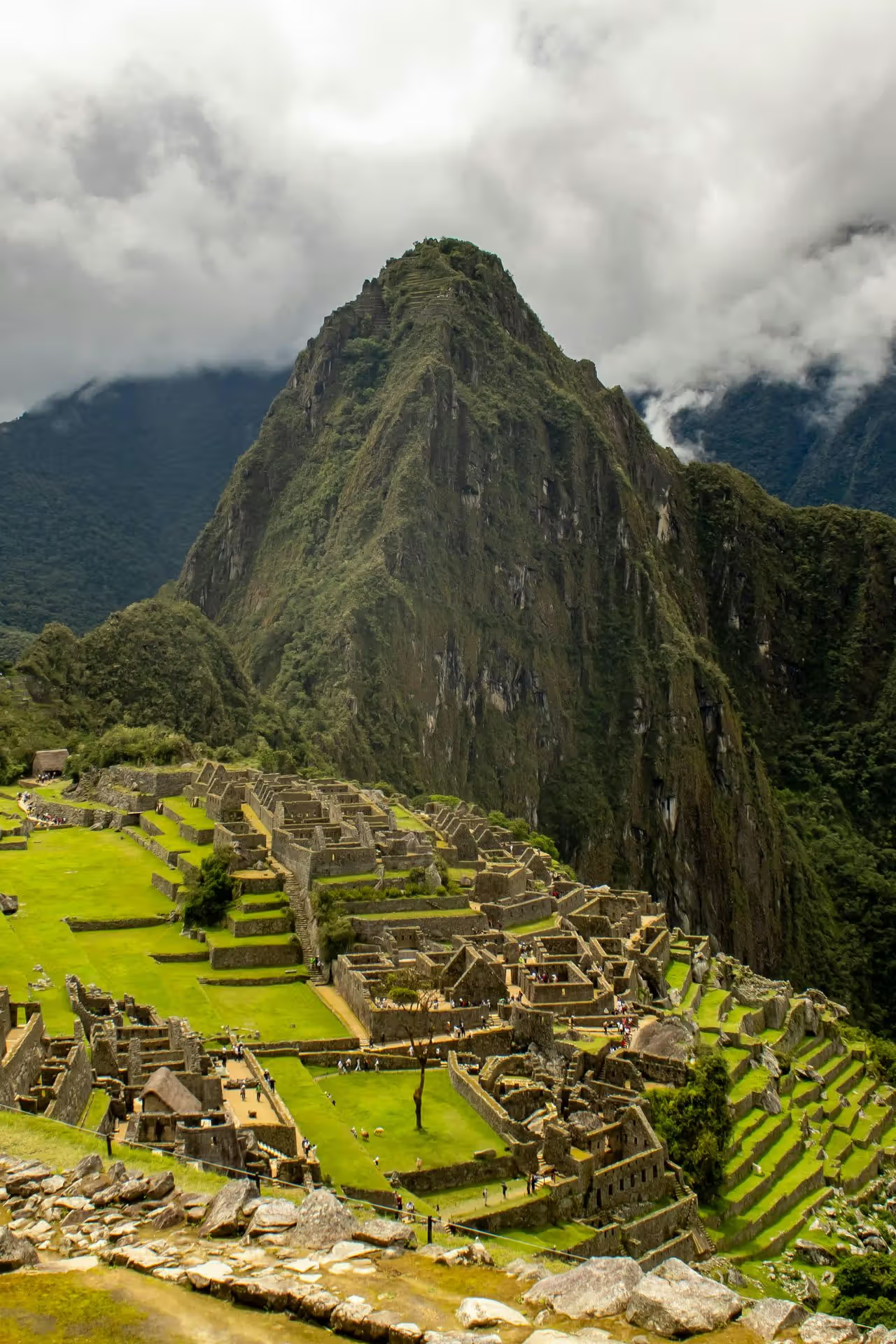
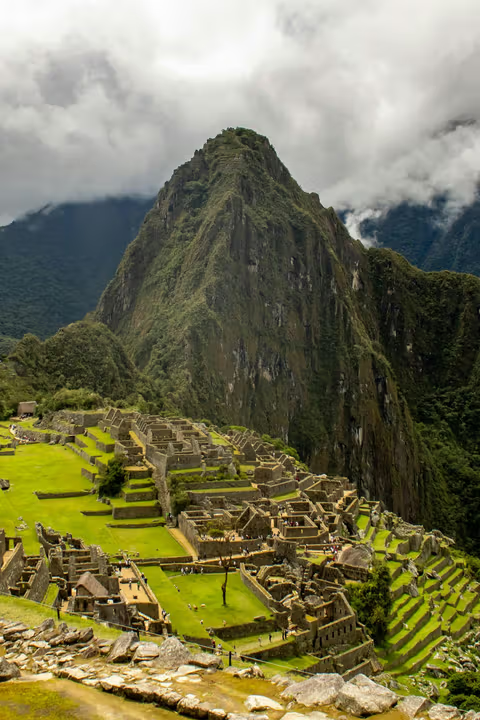
Yes. Machu Picchu tickets have a daily quota and sell out in high season; it is wise to book two to three months ahead. The classic Inca Trail is booked six months ahead through a quota system. CocoVolare arranges tickets, trains and permits with the necessary lead time.
+ How many days do I need to discover Peru?
Five days cover Lima, the Sacred Valley and Machu Picchu. Seven to ten days allow Cusco in depth and the Amazon to be added. Fourteen days allow Arequipa, the Colca Canyon and Lake Titicaca to be included. CocoVolare designs itineraries from five up to twenty-one days according to pace and profile.
+ What currency is used in Peru?
The Peruvian sol (PEN). Visa and Mastercard are accepted in city hotels, restaurants and shops. It is wise to carry cash for markets, taxis and rural communities. Exchange currency at authorised bureaux in Miraflores or San Isidro, never on the street or at the airport.
+ Is it safe to travel to Peru?
Yes, on the usual tourist circuits: Miraflores, San Isidro and Barranco in Lima, Cusco, the Sacred Valley, Arequipa, Puno and the Amazon with a lodge. The standard urban precautions of any capital apply. CocoVolare operates only within areas with established tourist coverage, with private transfers and local guides.
+ Do I need a yellow fever vaccine?
The yellow fever vaccine is recommended if your itinerary includes the Amazon (Tambopata, Madre de Dios, Iquitos). It is best applied at least ten days before the trip. For a trip limited to Lima and the highlands it is not necessary. Travel insurance with altitude cover is essential.
+ What is the train to Machu Picchu like?
Two operators, PeruRail and Inca Rail, depart mainly from Ollantaytambo. There is a panoramic class with wide windows, a premium class with onboard service, and Belmond’s luxurious Hiram Bingham, with a 1920s dining car. CocoVolare chooses the class according to the trip.
+ Is Peru a good gastronomic destination?
It is one of the best in the world. Lima concentrates restaurants that recur in global rankings, such as Central, Maido and Kjolle. Peruvian cuisine combines coast, highlands and jungle, and five heritages: Creole, Nikkei, Chifa, Andean and Amazonian. Eating well, every day, is part of the trip.
+ Can I travel to Peru with children?
Yes, it is an excellent family destination from the age of eight, because of the altitude. CocoVolare adapts the pace, with guides who tell the Inca world as a story, ceramic and textile workshops, days with weaving families and hotels with a garden and pool such as Sol y Luna.
+ How much does a trip to Peru cost?
A seven-day boutique trip, excluding international flights, sits in the comfort band between 2,975 and 5,320 USD per person in double occupancy. CocoVolare signature itineraries start from 2,600 USD per person for five days. Each quote is adjusted to your travel window.
+ What does a CocoVolare trip to Peru include?
Itinerary design, domestic flights, boutique hotels with breakfast, the train to Machu Picchu, private transfers with a driver, archaeologist and biologist guides, signature experiences, site entrance tickets and 24/7 concierge. Each trip is designed from scratch according to your profile.