
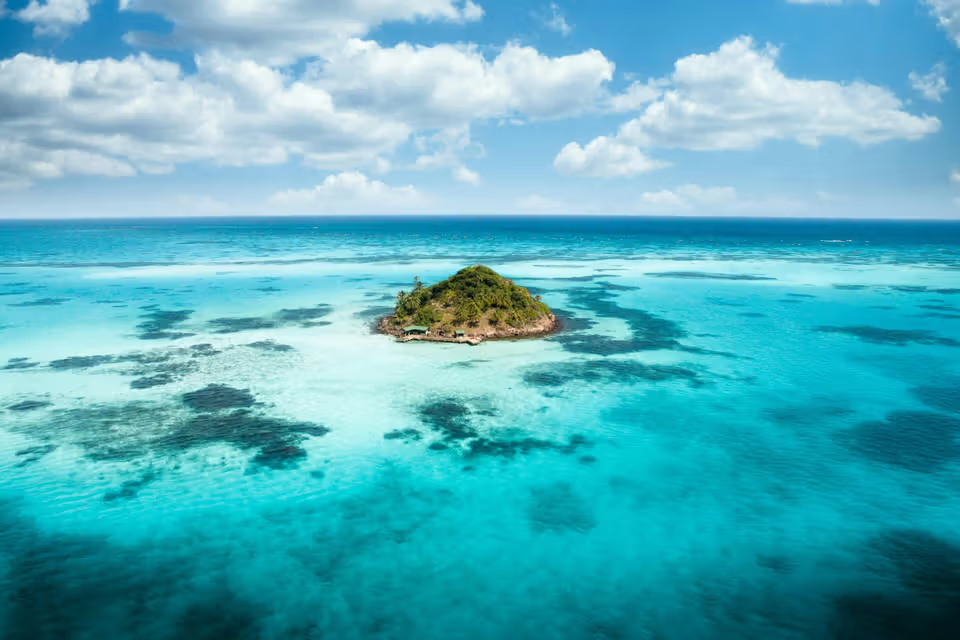
From the Canal viewpoint, a cargo ship the size of three city blocks crosses between two oceans while the guide explains what it pays in tolls, and the figure draws whistles. Panama produces that sensation of machinery that works: flights connecting the whole continent, skyscrapers beside a restored colonial quarter and, one short flight away, islands where the wifi surrenders before the traveler does. The safety question here has a calmer answer than in almost any neighbor.
The short answer
Panama is one of the region’s most stable countries for tourism. Panama City, the Canal, Casco Viejo, Bocas del Toro, Boquete and the San Blas archipelago operate entirely as normal. The only zones the advisories ask travelers to avoid are two remote areas conventional tourism never reaches: an unpopulated strip of Caribbean coast and parts of the Darién jungle toward the Colombian border.
What the official advisories say as of November 2026
The US State Department keeps Panama at Level 2: Exercise Increased Caution, with the advisory in force as of November 2026. The do not travel zones are exactly two, both far from any circuit: the coastal strip of the Mosquito Gulf, on the unpopulated Caribbean side, and parts of the Darién region. The UK FCDO matches that map and adds one practical note: hiking in the Boquete and Chiriquí highlands calls for an experienced guide, because trails are poorly marked and phone coverage is unreliable.
Area by area
Panama City carries typical capital-city risk: opportunistic theft in crowded spots. The traveler’s neighborhoods, Casco Viejo, San Francisco, Punta Paitilla, Costa del Este, are walked with the ease of any modern city. The Canal and its locks are a fenced, guided visit whose only hazard is the sun. Bocas del Toro and San Blas live on island tourism, with boats and local hosts; planning matters more than precaution. Boquete is coffee and flower country, settled by retirees from half the world, among the most peaceful corners of the isthmus. The deep Darién stays out of every tourist design, and its outer edge is visited only with a professional operator.
The real day-to-day risks
The honest list is short: phones kept visible in crowded parts of the capital, taxis without an agreed fare, a few Caribbean beaches with currents that deserve respect and unmarked mountain trails. Sun and hydration cause more trouble than any statistic. In San Blas, where the Guna communities are in charge, traveling with an operator who works with them guarantees both respect and logistics.
What a well-designed trip solves
With private transfers, vetted boats for the islands, certified mountain guides in Boquete, hotels chosen for location and a 24/7 WhatsApp line that knows your plan, Panama flows like its own Canal. We have not yet published a Panama destination guide, but we design it bespoke as a Caribbean extension or a trip of its own: see how we work in our experiences and tell us the itinerary you imagine.
Frequently asked questions
Is Panama City safe for tourists?
Yes, with normal urban judgment: stay within the visitor neighborhoods, use app-based transport at night and keep valuables low-key. The restored Casco Viejo is walked day and night, alive with restaurants and rooftops.
Are San Blas and Bocas del Toro safe?
Both sit outside every zone flagged by the advisories. In San Blas you travel with the Guna communities as hosts; in Bocas the judgment is maritime: licensed boats, life jackets and sea schedules. Logistics weigh more than security.
What about the Darién?
The areas flagged by the advisories are remote jungle toward the border, without tourist infrastructure. The accessible fringe is visited only with a professional operator and local guides; beyond that, the Darién is part of no conventional itinerary.
Can I hike in Boquete on my own?
The official British advice is clear: with an experienced guide. The Barú volcano trails and the coffee farms are poorly marked and phones lose signal; a guide turns the risk back into scenery.
Do I need a visa for Panama?
Most passports from the Americas and Europe enter visa-free as tourists. We verify your specific case while designing the trip and leave the requirements in writing.
Advisories evolve; this guide reflects November 2026 and we update it as things change. Before booking, always check travel.state.gov and gov.uk, and for a Panama designed to measure, write to us: the first conversation is free.